


Featured Image STARBIOS2 Technical Assistance

What is the role of Technical Assistance Team in STARBIOS2?

Editorial TeamSTARBIOS2


STARBIOS2 Technical Assistance Team

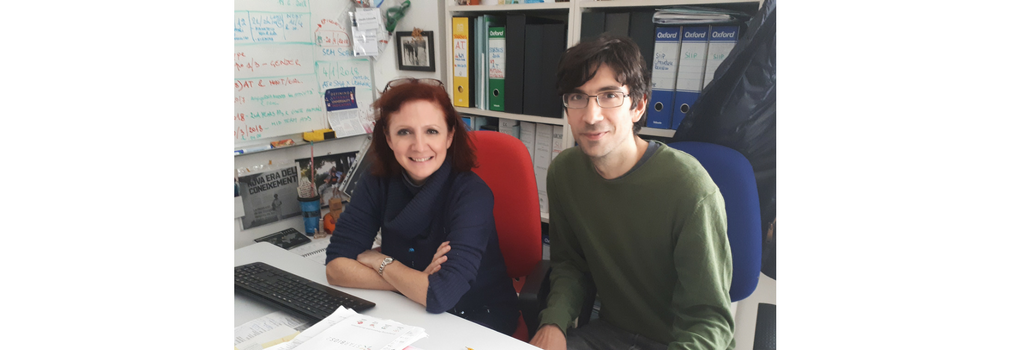
Claudia Colonnello and Giovanni Caiati from LSC

Could you shortly describe your organisation, and who is involved in STARBIOS2 project?

Our institute, Laboratory of Citizenship Science (LSC), is an association of researchers, trainers, knowledge managers and research project designers based in Rome, Italy. LSC works for promoting a better integration of social sciences perspectives in the spheres of scientific and technological research and for developing a better understanding of the social phenomena emerging in the interaction amongst science, technology and society. In STARBISOS2 project LSC is in charge of supporting the 6 Action Plans teams that are promoting a structural change toward RRI in their institutes, through a set of Technical Assistance (TA) activities. Furthermore LSC participates also in the development of a learning process for the whole project that will lead to design a model for RRI in biosciences.

The Technical Assistance team is composed by Giovanni Caiati and Claudia Colonnello who are directly involved in the ordinary implementation of the TA activities. Furthermore our team includes other LSC experts who carry out back-office activities concerning the management and the scientific supervision.

STARBIOS2 Technical Assistance

What is your role as technical assistance?

Our role is to assist the Action Plans teams in order to successfully drive the Action Plans all along the project from the design phase to their completion. In practice we support the teams for coping with emerging problems or to benefit from emerging opportunities; we provide specific expertise on RRI and its 5 keys also suggesting and offering contacts with experts outside the consortium; we facilitate exchange of experiences and collaboration within the consortium members included the three international partners coming from South Africa, Brazil and United States; we develop and provide tools and templates for the main milestones of the projects; we review and help in drafting the annual detailed plans, etc. The fulfillment of all these tasks is possible thanks to a set of stable activities foreseen by STARBIOS2 such as periodic sessions with all the Action Plan teams, annual on site visits, annual mutual learning meeting, and actions performed on-demand (so on the basis of the specific needs of each action plan).

May you provide some example of the work carried out so far?

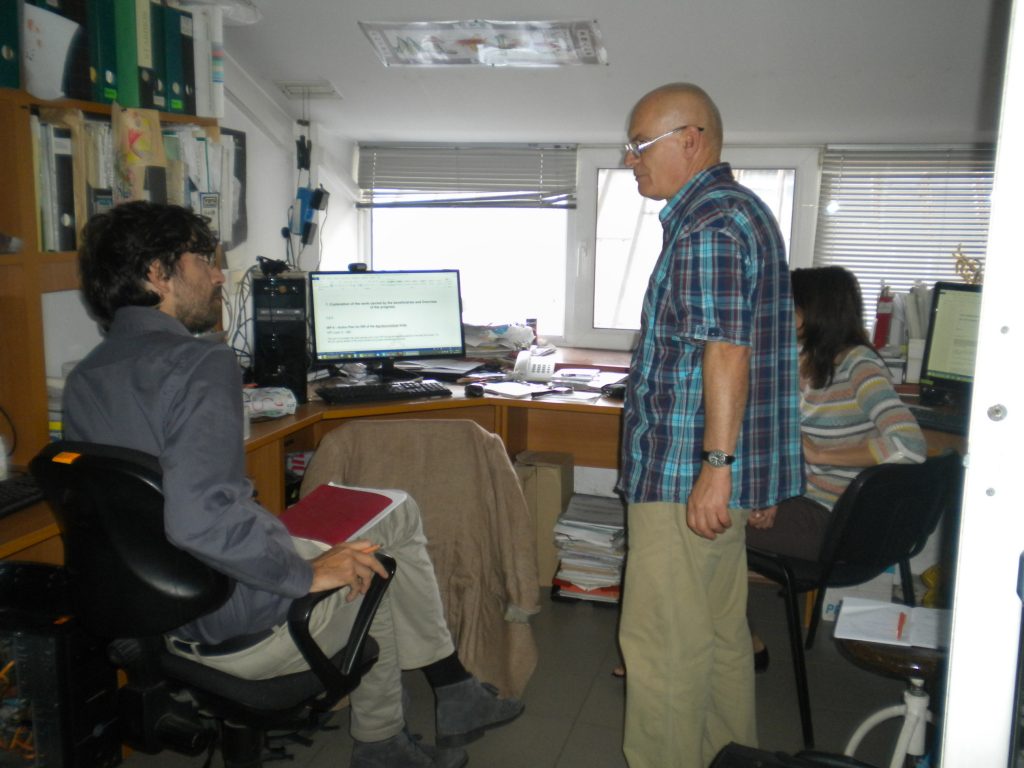
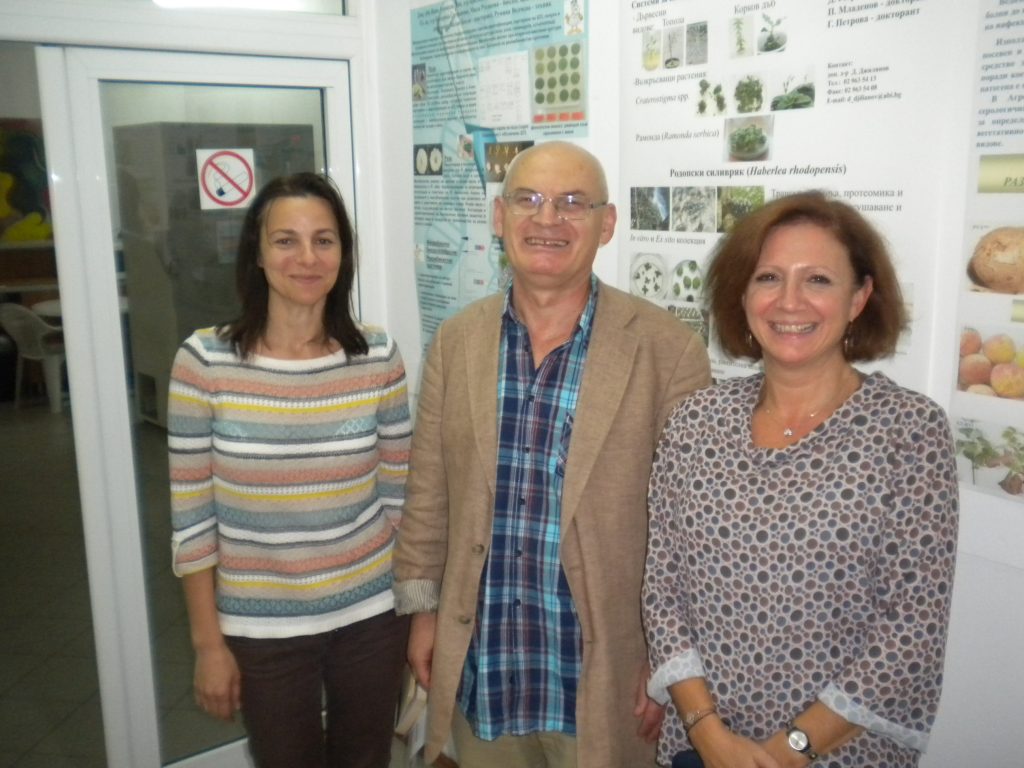
A useful example for understanding how Technical Assistance work, is the working session on genderisation of research contents in plant science that was prepared jointly by Technical Assistance team and ABI team (Sofia) as a follow up of the on-site visit in Sofia (September 2017, see photo). During the session, that was held at a distance on December 13, 2017, Technical Assistance team provided a portrait of Gendered Innovations concepts and methods, as well as a set of examples of application of content genderisation in plant science and in agriculture. Through an interdisciplinary discussion (the interaction between social scientist of TA team and plant scientist in ABI) a set of lines of action were singled out on how genderisation of contents may be applied at the activities of a plant research institute and potentially in ABI.
STARBIOS2 Technical Assistance

On-site visit in Sofia

STARBIOS2 Technical Assistance

On-site visit in Sofia

STARBIOS2 Technical Assistance

On-site visit in Sofia

What are the aim of the technical assistance on-site visits? May you provide some example?

The on-site visits have a twofold objective. On the one side they are an occasion for each Action Plan team to discuss in detail with the Technical Assistance team the ongoing status of the action plan and the next phases of the work. This function is very important because provide an occasion of reflection for the teams and a space to go beyond the mere implementation and to think in a perspective of more general process of structural change toward RRI.

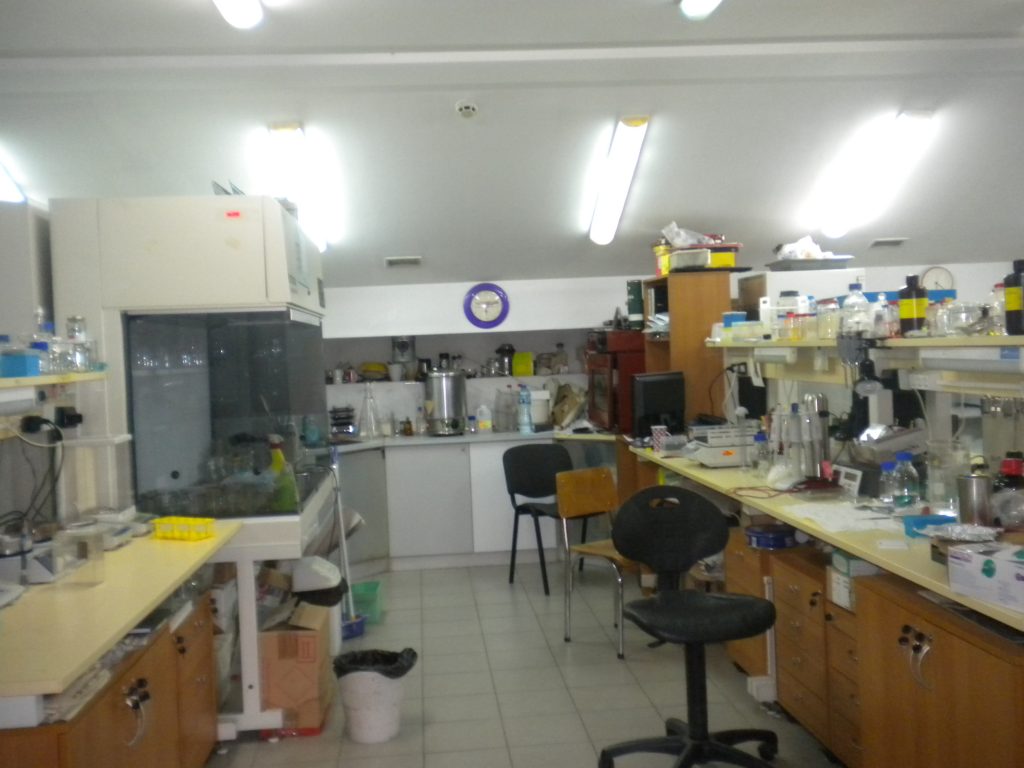
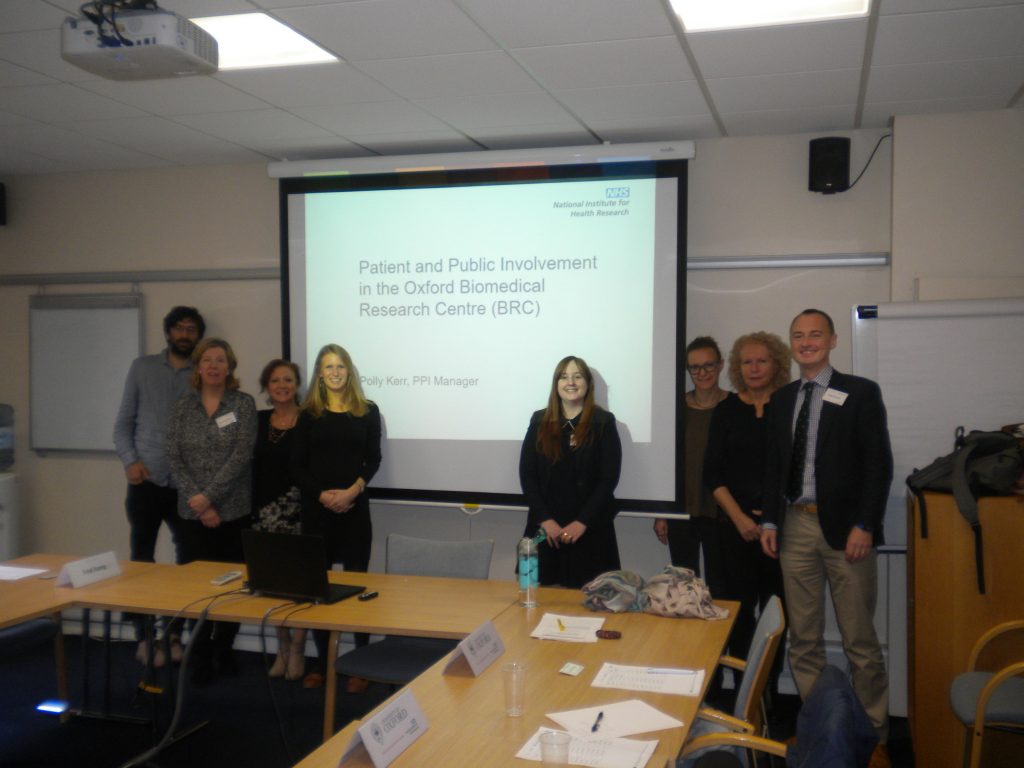
On the other side, the presence of TA team as external expert is a good occasion to discuss the action plan with different actors present in the Faculty were the action plan is ongoing. During the visits carried out in September and October we had the opportunity to talk and discuss STARBIOS2 project with a wide set of institutional actors (an example is provided in the picture), fostering their interest and involvement in the project.
STARBIOS2 Technical Assistance

On-site visit in Oxford University

Celebrating IWD 2018 and Science Education Day in STARBIOS2

Editorial TeamSTARBIOS2

International Women’s Day 2018

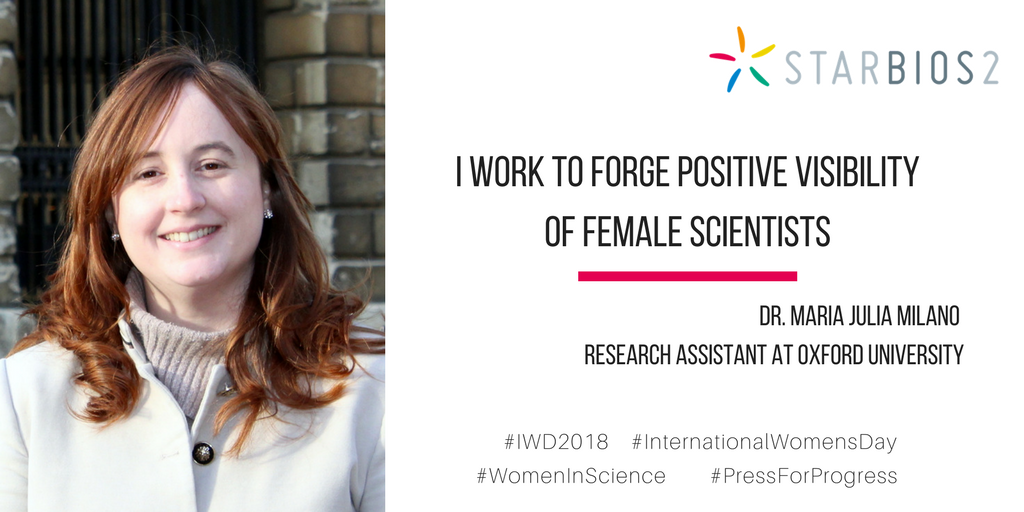
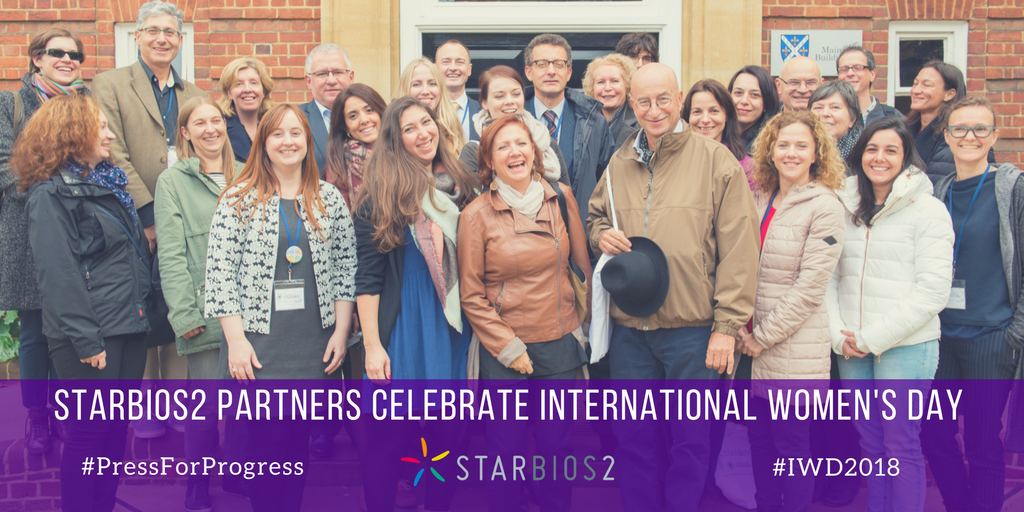
Last week on the 8th of March the world celebrated the International Women’s Day (IWD). STARBIOS2 partners took part in this year’s campaign #PressForProgress, a strong call to unite and motivate everyone to think, act and be gender inclusive.

In STARBIOS2, our first aim is to contribute to the advancement of the RRI (Responsible Research and Innovation) which underpins Horizon 2020.

RRI includes 5 key issues – Education, Gender, Ethics, Societal Engagement and Open Access  – each of them are intertwined and their successful application lead to the bigger goal of the STARBIOS2 project: conceiving and implementing Action Plans (APs) oriented to attain RRI structural change in 6 institutions active in the field of Biosciences.

This is how Starbios2 partners celebrated IWD!


Science Education Day

On Science Education Day (14 of March) we were happy to thank and show gratitude to all the teachers, educators, scientists, researchers and everyone who shares their passion for science with children and adults. STARBIOS2 partners are one of those people, as the Consortium consists mainly of scientists in different spheres of Biosciences.

As Science Education is one of the key issues of RRI, we grabbed the opportunity to thank our outstanding partners for promoting Science Education!


And you, how did you celebrate International Woman’s day and Science Education Day? Write us in the comments!

To receive more updates on the STARBIOS2 project, follow us on Twitter and Facebook!

You can also check our blog posts dedicated to Gender and Science Education.

STARBIOS2 Education UG

Education in Biosciences, experience of the University of Gdansk, Poland
Editorial TeamEducation, RRI

STARBIOS2 Education Gdansk University
Prof. Igor Konieczny, Ph.D. Dean of the Intercollegiate Faculty of Biotechnology UG & MUG

How do you understand Education in biosciences research?

Education is a vital aspect of the Responsible Research and Innovation concept. In order to build responsible relations with the society, there is a need for a certain level of science literacy in the society. On the one hand the scientists need to be aware of the need of communicating with other members of society, on the other hand the society needs educational interventions in order to be able to receive the information from scientists.

What are the current standards and actions to achieve better Education on biosciences in your country and in your University?

In Poland there are numerous initiatives to popularize science among society, e.g. science picnics, science festivals, open days in research institutions. Also some media such as TV, newspapers or radio broadcasts focus on familiarizing the society with the new discoveries of science. At University we organise special events such as debates on GMO, Biologists Night, Baltic Science Festival and other in order to broaden knowledge on biotechnology. Also special seminars and lectures on current problems in science are organised regularly.

What are you aiming for with the implementation of the STARBIOS2 actions towards better Education standards for your institute?

Our goal is to raise awareness about the issues covered by the RRI concept among stakeholders in Poland. An awareness raising campaign will be promoted locally at the Intercollegiate Faculty of Biotechnology UG & MUG, at the University of Gdańsk and beyond and will be dedicated to specific target groups.

What kind of actions are you going to establish to fulfill your objectives?

We organise short seminars on each of the five RRI key issues within our Faculty. As a tool to reach students and young researchers we will dedicate one edition of our well-known IFB Biotechnology Summer School to social responsibility of biosciences. We also aspire to offer a new bioethics course to our PhD students. Moreover, we plan to publish a comprehensive research progress reports about the achievement of our researchers as well as their societal engagement activities.

Who is involved, from your University, in the AP in order to complete your final objective?

The STARBIOS2 Team at UG consists of staff members from biotechnology, social sciences faculty, UG Office for Science and UG Library.


Check our previous blog post by the University of Gdansk on Open Access in Biosciences research. 

Featured Image STARBIOS2 Ethics UP

Ethics and Research, experience of University of Primorska

Editorial TeamEthics, RRI

ethics STARBIOS2 UP

How do you understand Ethics in biosciences research?

Working at the Department of Biodiversity, I am aware about differences in opinions regarding the human relationship toward the rest of the natural world.  Conservation biologists agree that biodiversity is valuable and that the extinction of species, caused by human activities, should be decreased and avoided. However, justifications for these principles vary, ranging from arguments that emphasize the instrumental value of other species for humans to ethical theories that assert that wild life has intrinsic value. The debate on environmental ethics is focused on developing universal theories why humans should protect their natural environment. What we are facing in our research and working with students is the challenge to find a solid rational justification for why nature should be protected.

What are the current standards and actions to achieve better Ethics in your University and in your country?

In the case of animal and human subjects’ research, all research conducted on Faculty of Mathematics, Natural Sciences and Information Technologies must be approved by National Medical Ethics Committee or by National Ethics commission for animal experiments. All field work with animal has to be approved by Ministry of the Environment and Spatial Planning.

What are you aiming for with the implementation of the STARBIOS2 actions towards better Ethics standards for your institute?

In relation to Ethics, our strategy is to raise awareness and evaluate the procedures for planning and including research ethical issues in researchers’ work via developing Code of conduct for conservation biology for our department and Code of conduct for biology in other departments working in the field of bioscience. In next step, we plan to increase bioethics elements in study courses.

What kind of actions are you going to establish to fulfill your objectives?

In close collaboration with other Bioscience departments and through reviews, we plan to explore the relationships between the public and conservation as well as regard animal welfare. We will establish ethical commission at the faculty level who will review processes in relation to all bioethical activities in the faculty and also take care for all documents and lesson needed regarding ethical work with humans and animals.

Who is involved, from your University, in the AP in order to complete your final objective?

Our work requires a close collaboration between STARBIOS2 team and also, we involved, philosopher Dr. Tomaž Gruškovnik and his team. We are excited to cultivate relationship between Biodiversity and Anthropology Department at Faculty of Humanities.


Check our previous blog post by the University of Primorska “Education and RRI”.

Open Access Biosciences STARBIOS2

Open Access in Biosciences seen by the University of Bremen, Germany

Editorial TeamOpen Access, RRI

Open Access_Biosciences_STARBIOS2-University of Bremen

How do you understand Open Access in biosciences research? 

Besides scientific publications of research results, the free access to databases for sequences of bio molecules like DNA, RNA and proteins is crucial for the field of biosciences. Whereas the access to most genomic databases is already free, the Open Access to research publications is still on the way.

“If I saw further than other men it was because I was standing on the shoulders of giants.”

This quotation from Isaac Newton shows that research is always based on the results of previous research. The access to scientific publications is a prerequisite for any research activity. Open Access provides the free and unrestricted access to scientific publications via the internet. This is not just a benefit for the research community itself, but also for the society as a whole: every interested person has access to scientific research results.

What are the current standards and actions to achieve better Open Access in your University and in your country?

The “Berlin Declaration on Open Access to Knowledge in the Sciences and Humanities” from 2003 is one important milestone in establishing Open Access in the German science system. All big science institutions in Germany – e. g. Max Planck Society, Helmholtz-Association and German Research Foundation– are among the first who signed in the declaration. Up to date more than 550 German and international institutions have signed in and admit to support and foster Open Access.

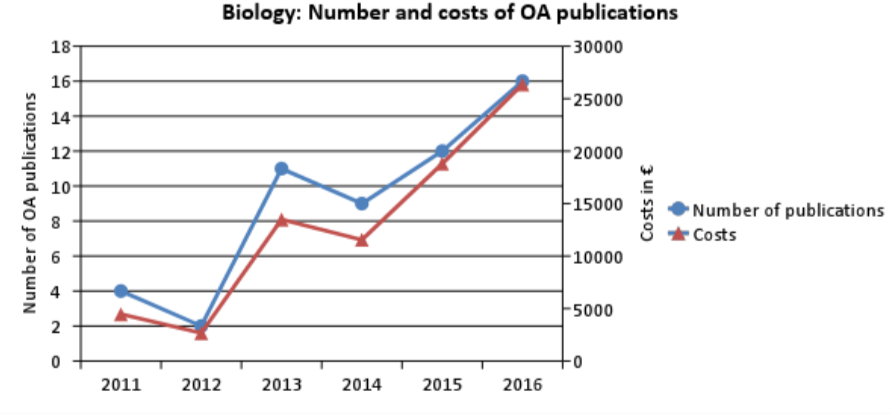
The University of Bremen sets up an Open Access policy in 2011. This policy comprises the signing of the “Berlin Declaration” and encourages the members of the university to publish their research findings in Open Access. At the State-Library of the University of Bremen (SuUB), one staff member is responsible for supporting publications in Open Access by offering tailored information about the procedure and the way of funding. The number of Open Access publications in the field of biosciences at the University of Bremen has increased significantly since 2011. The graphic presents only the Open Access publications that were processed via the SuUB.

Open Access - STARBIOS2 - University of Bremen

Figure 1: Open Access publications in Biology processed via the SuUB at University of Bremen

What are you aiming for with the implementation of the STARBIOS2 actions towards better Open Access standards for your institute?

The Open Access strategy of the University of Bremen is quite well, but still not transparent to all members of the Faculty02. One of our goals of the STARBIOS2 Action Plan is to promote the awareness and the knowledge about the existing Open Access strategy of students and researchers of all career levels. Open Access should become the standard of scientific publications at Faculty 02 Biology and Chemistry.  

What kind of actions are you going to establish to fulfil your objectives?

One of our actions is to identify the needs and barriers in regard to Open Access at the Faculty 02. The list of criteria will contribute to the development of supportive activities. One idea is to adapt the existing workshop on Open Access to the special needs of biosciences. Furthermore the faculty-intern website will be extended by information about Open Access in general and the existing methods and measures in respect to Open Access at the University of Bremen.  

Who is involved, from your University, in the AP in order to complete your final objective?

As STARBIOS2 focuses on structural change in respect to Open Access on the faculty-level all stakeholders of Faculty 02 are involved: dean, professors, research group leaders, Postdocs, PhD students, students and representatives of the library and Bureau of Study.  


Read our prevous Q&A with the University of Bremen on Gender in Biosciences.

STARBIOS2 Education University of Primorska

Education and RRI: experience of the University of Primorska, Slovenia

Editorial TeamEducation, RRI

STARBIOS2 _ UP_ Education
How do you understand Education in biosciences research?

Education is, to our opinion, main link between biosciences research and transfer of obtained knowledge to next generation of scientists. This process is deep-rooted but not necessarily made explicit and it should be exploited much more effectively for the benefit of all involved stakeholders. The best way of enhancing the motivation of both academics and students is linking research and teaching and furthermore transferring this knowledge not only to students but also to broader public.

What are the current standards and actions to achieve better Education in your University and in your country?

Studies at the University of Primorska are based on modern teaching methods and are carried out in various forms, such as lectures, seminars, exercises (field work, laboratories), tutorials and independent study. Teaching and learning processes are based on proactive methods that encourage students to critically evaluate their acquired knowledge and skills and are focused on the integration of education and research. International cooperation and mobility of academics and researchers is one of the basic policies of our University. We also promote mobility within existing schemes (Erasmus+, CEEPUS) and within bilateral agreements on different levels (national, university and faculty).

What are you aiming for with the implementation of the STARBIOS2 actions towards better Education standards for your institute?

At the University of Primorska, we are implementing key actions of the ‘Science with and for Society’ by connecting together researchers, citizens, policy makers, business and third sector organizations. We believe that all societal actors working together could improve Education as well as research at our University. With our activities, we are aiming at better understanding of RRI not only at university level but more importantly at secondary educational level. We are targeting next generation of bio scientists in hope for them to recognize and implement RRI as important part of their future work.

What kind of actions are you going to establish to fulfill your objectives?

We will organize round tables, workshops, thematic lectures, field work activities aimed and prepared specifically for different target groups (High school biology teachers, researchers, students, general public). We also plan to involve in teaching process experts from other fields such as media, NGOs and business. One of the main activity is changing the syllabus of 3 different courses at undergraduate and graduate level, which will implement RRI as part of mandatory basic training for students of Biodiversity and Nature Conservation.

Who is involved, from your University, in the Action Plan in order to complete your final objective?

Main activities are foreseen by STARBIOS2 core team with assis. prof. dr. Vladimir Ivović and PhD student Katja Kalan as leading researchers dedicated to RRI Education key. We are also involving researchers and academics from several departments from the University of Primorska, particularly from department of Biodiversity and department of Applied Natural Sciences, as well as experts from local media (Regional broadcaster), NGOs, Instituto de Higiene e Medicina Tropical, Universida de NOVA de Lisboa and Universite Pierre et Marie Curie – Paris, France (ERASMUS+ project).

Read our previous blog post written by STARBIOS2 partners from the University of Primorska on the topic “Open Access in Biosciences”.

STARBIOS2_FEATURES IMAGE - Ethics in biosciences UNITOV

Ethics and RRI: the experience of UNITOV, Italy

Editorial TeamEthics, RRI

STARBIOS2 Ethics UNITOV Carla Montesano

Dr Carla Montesano – Assistant Professor of General Pathology and Immunology, member of STARBIOS2 Coordination Team, and responsible for the STARBIOS2 Action Plan of University of Rome – Tor Vergata

Taking into account the Italian context, what are the objectives of the STARBIOS2 team regarding the relationship between ethics and RRI?

In Italy, as is known, ethics in the biosciences sector is regulated by law at the national level and specific activities, such as the use of animals and biological samples of human origin, the generation and use of GMOs, are controlled by specific control committees.

Within the framework of the STARBIOS2 project at the Department of Biology of the University of Rome “Tor Vergata, we intend to raise awareness among young researchers on ethical issues, increasing the perception of ethics as a useful way for improving the research (in a qualitative sense): this to say that the adoption of an ethical practice in research means that research results and products are socially accepted.

Furthermore, we aim to involve young researchers and PhD students in the ethics debate, as an important RRI key. The idea is to organize a “Bioethic open lab”, that is a permanent and open working group in the Department of Biology, for working out ethical issues regarding the biosciences.

Which institution, within your university, is promoting this reflection?

The “UNESCO interdisciplinary Chair in Biotechnology”, active since twenty years in the Department of Biology of University of Rome “Tor Vergata”, has carried out research related to the immunology of infectious diseases, educational and training activities, and technology transfer in developing countries.

Research and capacity building work related to the promotion of biotechnology in Africa oblige us to take into consideration the issues of sustainability, inequality, as well as bioethics. For this reason, the Chair has recently been transformed into “UNESCO interdisciplinary Chair in Biotechnology and Bioethics and involves not only teachers of Immunology, Pathology, Biotechnology, but also teachers of Bioethics and Social Ethics.

What other actors are you involved in these activities?

As for every key aspect of RRI, it is essential to involve a wide range of actors. Just to consider those inside the University, we can mention the Members of the Ethical Committee of Animal Facility, the Guarantee Committee (CUG), the members of the Direction of University Hospital, the General Manager of University, as well as several professors, researchers and students.

Read the previous blog post on “Education in Biosciences” by the University of Rome “Tor Vergata”.
Featured Image STARBIOS2 Blog Ethics Oxford

Ethics in Biosciences Research, University of Oxford

Editorial TeamEthics, RRI

STARBIOS2 Unoversity of Oxford Ethics in Biosciences
How do you understand Ethics in biosciences research?

Ethics in biosciences research should be understood as means to ensure high-quality research and guarantee the protection of fundamental rights. Even though ethic principles are well defined and established, as biosciences research progresses, new ethical conflicts may arise. All biosciences research must be carried out within the good practice framework that Ethics represents.

What are the current standards and actions to achieve better Ethics in your University and in your country?

In the case of human subjects’ research, all research conducted on National Health Service (NHS) patients or their information must be approved by the Research Ethics Committee (REC) of the National Research Ethics Service (NRES) which coordinates RECs across the UK. If the research does not include NHS patients or their information, the University of Oxford has its own system of research ethics governance: the Central University Research Ethics Committee (CUREC). The majority of approvals are decentralised to Interdivisional RECs, and then to Departmental RECs.

In the case of research conducted on animals, the UK has strict regulations that are overseen by the Home Office Department of the Government. Researchers must be trained and be granted a Home Office License in order to be able to conduct research on animals.

What are you aiming for with the implementation of the STARBIOS2 actions towards better Ethics standards for your institute?

In relation to Ethics, our strategy is to raise awareness and evaluate the procedures for planning and including research ethical issues in researchers’ work via discussions with them, collaborate on research proposals with the Oxford BRC Ethics Research Fellow, and conduct research within the Oxford BRC research themes in this respect.

What kind of actions are you going to establish to fulfil your objectives?

In close collaboration with NIHR Oxford BRC Ethics Research Fellow and through reviews, we plan to explore the relationships between the public, genomic medicine researchers, and genomic commercial companies with respect to the acceptability of practices aiming to improve healthcare. We will also review processes in relation to consent from patients at the boundary of the ability to consent. This will be explored by focusing on cardiovascular and emergency medicine research as strategies for consent are needed for patients participating in critical care research.

Who is involved, from your University, in the AP in order to complete your final objective?

Our work requires a close collaboration between STARBIOS2 team, Dr Mark Sheehan (University of Oxford and NIHR Oxford BRC Ethics Research Fellow), and his team. We are excited to cultivate this relationship.


Read our previous Q&A with the University of Oxford on “Education as a key RRI issue”.

Featured Image STARBIOS2 Blog Gender University of Bremen

Gender in Biosciences Research, University of Bremen

Editorial TeamGender, RRI

STARBIOS2 Gender University of Bremen
How do you understand Gender in biosciences research?

Women are under-represented in research generally, and in STEM occupations specifically. The explanations for these patterns vary from discrimination of women and “glass-ceiling” effects, to implications of gender differences in household and family, and to modern men and women making different choices due to different life values and life priorities.

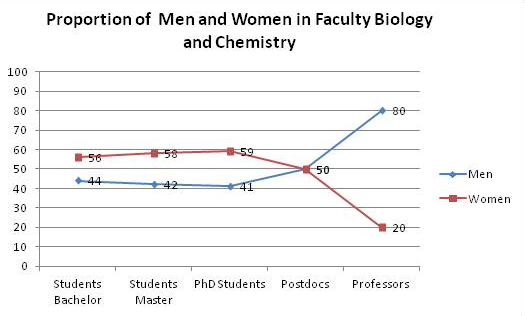
Historically, natural science has been perceived as a male domain. Today, gender in biology study programs is balanced up to and including the doctoral level (see Figure 1 – the proportion of men and women in Faculty 02 Biology and Chemistry at the University of Bremen). The critical point is the retention of women in and after the postdoctoral career level. In average, in academic biosciences in Germany only 15 per cent of Professors are female. The “leak” of women from the science pipeline means a regrettable waste of expertise. Gender diversity enriches scientific enquiry, promotes excellence, and opens the horizon for societal contextualized questions and research.

STARBIOS2 Gender Figure 1 Leaky Pipeline University of Bremen

Figure 1. “Leaky pipeline” in the Faculty biology and Chemistry at the University of Bremen (based on the rector’s report University in Numbers, 2015)

What are the current standards and actions to achieve better Gender in the University of Bremen?

The Action Plan of Science 2020 of the Senator of Science and Research of the Federal State of Bremen states the need of cultivating a more gender-balanced environment at the institutions of higher education. Gender inequality in scientific careers undermines the principles of fairness, equality of opportunity and social justice.

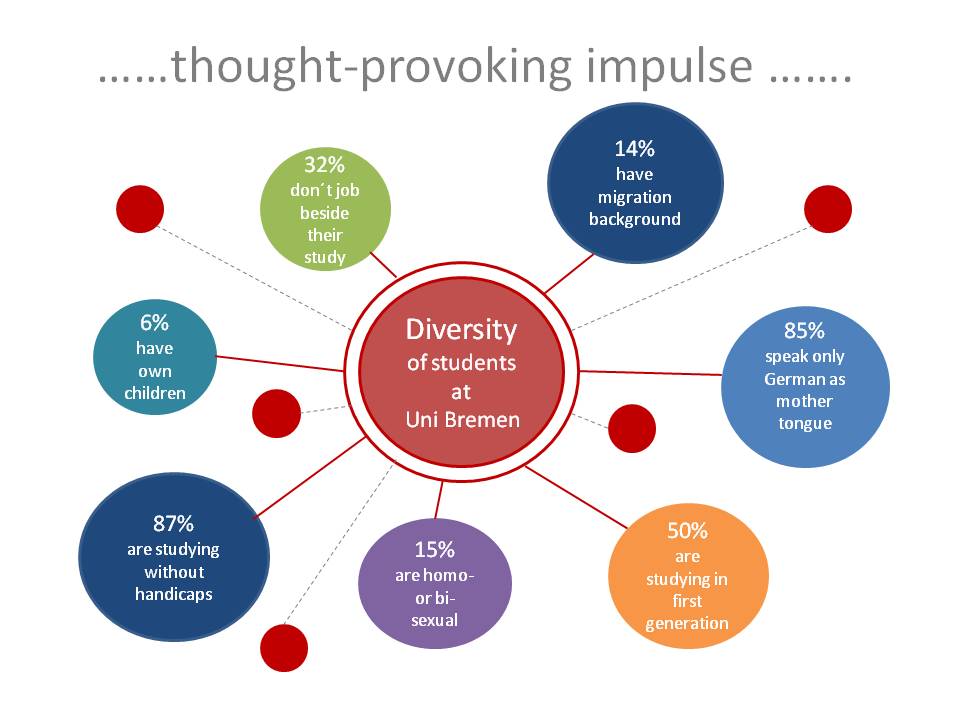
Therefore, structural principles to cover gender-political measurements are in the core of the recently launched Diversity Strategy of the University Bremen “Diversity as a chance – recognizing, promoting, and designing”. It comprises seven guiding principles such as “the university as part of the society”; “diversity in and through research and teaching”; “inclusive approach”; “competence in respect to diversity”; “diversity as a factor for study success”; “empowerment and participation”; and “anti-discrimination”. The diversity strategy is a guiding principle for the dynamic development of the awareness and understanding of gender and diversity issues at the University Bremen (see figure 2 – thought-provoking impulse). It is triggered on central level as well as on faculty level. The Center of Gender Studies is a central institute for gender research in research and education. It supports the academic and political integration of women and develops new perspectives of interdisciplinary approaches.

STARBIOS2 Gender Figure 2 Diversity of Students University of Bremen

Figure 2. Diversity of students at University Bremen (www.uni-bremen.de/diversity)

What are you aiming for with the implementation of the STARBIOS2 actions towards better Gender standards for your institute?

Our goal is to adopt the already existing general Diversity Strategy to the requirements of the Faculty 2 Biology and Chemistry. To raise the awareness of gender and diversity issues we will follow a process-oriented pathway. This comprises the cooperation with the central key-players of the diversity process (such as the women’s representatives, members of the department equal opportunities and anti-discrimination, members of the Center of Gender Studies, and the department family-friendly study). We will raise awareness for the “Code of Conduct” and will set measurements for an appreciate company of students and researchers by respecting their diversity. At institutional level we will discuss fostering and hindering elements for the academic and social integration of women in research groups.

What kind of actions are you going to establish to fulfill your objectives?

In the first year of the STARBIOS2 project we conduct an interview survey with members of our permanent focus groups students, doctoral students, and postdoctoral researchers. The findings form the basis for a questionnaire survey about the awareness of gender (and the other RRI keys), the degree of familiarity of gender measurements, and problems and needs in respect to gender issues. Target groups of the questionnaire survey are students and researchers of the Faculty Biology and Chemistry. Based on this state-of-the-art analysis we deduce recommendations for a RRI mission statement for biosciences and discuss them with the important stakeholders and in the focus groups. Furthermore, we will develop and offer two academic building blocks “Gender and Equity” and “Gender and Diversity in Biosciences” to raise the awareness of gender issues.

Who is involved in the action plan?

We follow a bottom-up – top-down implementation strategy. Therefore, all important stakeholders of the faculty as well as the members of the focus groups students, doctoral students and postdoctoral researchers are involved in all steps of our action plan. Our common shared goal is the development of RRI mission statement at faculty level. Therefore, we will work together with social scientists of the Center of Gender Studies, the department of equal opportunities and anti-discrimination, and the department family-friendly study. For the development of the training elements we will work together with the women´s representative and an expert for media pedagogy.

Read another blog post by the University of Bremen on Societal Engagement in Biosciences.