Science is a part of society and co-evolves with it. But science-society relationships are changing, and biosciences are at the core of these changes. Join us for our final event on 29 May, when we discuss the changing relationship between science and society, and what this means for responsible research and innovation (RRI).
Transformations in post-modern societies and science production pose new challenges for governance that RRI, or similar approaches, can certainly contribute to face. This may me truer than ever in this period of great emergency related to COVID-19, and will probably continue to be true in the future.
STARBIOS2 has worked for 4 years to produce RRI institutional or “structural” changes in several bioscience organizations. We have learned that for RRI mainstreaming to be successful, we need contextualisation on four levels: organizational, disciplinary/sectoral, geopolitical/cultural, and historical.
The preliminary programme for our final event is now public, and we are looking forward to in-depth discussions on the changing science-society relations and what this means for bioscience, as well as the special COVID-19 themed event that same afternoon.
The STARBIOS2 final event will be dedicated to discussing these challenges for mainstreaming of responsible research in biosciences. We hope to see you there! Register here!
We have been implementing structural change towards Responsible Research and Innovation (RRI) for 4 years on 4 continents. Our STARBIOS2 journey is now coming to an end, but we will continue practicing RRI and carrying on the STARBIOS2 legacy.
Our final event was a great opportunity to showcase the challenges for RRI mainstreaming in bioscience, and our success stories of overcoming those challenges and succeeding to enable structural change at European bioscience research institutions, inspiring similar changes in the US, South Africa & Brazil. In this final newsletter, we want to let you know where to download our guideline and that speaker presentations and video recordings from our final event are now available on our website and on YouTube. And finally, to share with you our stories, and thank you for these 4 years together.
RRI success stories
RRI ACTION ON SOCIETAL ENGAGEMENT AT THE UNIVERSITY OF ROME – TOR VERGATA At University of Rome – Tor Vergata, a small team of bioscience researchers made structural change happen. How did they manage to do so? This is their story… [READ MORE]
RRI ACTION ON GENDER AT UNIVERSITY OF GDANSK Implementing gender focused activities to obtain structural changes on institution-wide level at University of Gdansk! Find out what they learned, and about the united efforts of a complex project team [READ MORE]
RRI ACTION ON OPEN ACCESS AND PUBLIC ENGAGEMENT AT THE UNIVERSITY OF PRIMORSKA What does RRI look like at the youngest public university in Slovenia? And more specifically, in biodiversity? STARBIOS2 experoences from University of Primorska [READ MORE]
RRI ACTION ON ALL RRI KEYS AT AGROBIOINSTITUTE, SOFIA, BULGARIA The STARBIOS2 guidelines offer many examples of how structural change looks different in different contexts. With expertise in plant science, this is an overview of Agrobioinstitute’s experiences implementing RRI [READ MORE]
RRI ACTION ON ALL RRI KEYS AT AGROBIOINSTITUTE, SOFIA, BULGARIA The STARBIOS2 guidelines offer many examples of how structural change looks different in different contexts. With expertise in plant science, this is an overview of Agrobioinstitute’s experiences implementing RRI [READ MORE]
RRI ACTION ON EDUCATION AT UNIVERSITY OF BREMEN Education can be a powerful tool for to promote RRI! University of Bremen has used it to its advantage throughout the STARBIOS2 project. Find out what they have learned! [READ MORE]
RRI ACTION ON PUBLIC ENGAGEMENT AT FIOCRUZ, BRAZIL Fiocruz already had many common practices that fit within the spirit or RRI when the STARBIOS2 project started. Their main challenge was adjusting existing practices and taking a systematic approach [READ MORE]
RRI ACTION ON PUBLIC ENGAGEMENT AT UNIVERSITY MARYLAND BALTIMORE With a focus on technology transfer and public engagement, the UMB STARBIOS2 team has benefited from including graduate students in their RRI work [READ MORE]
RRI ACTION ON PUBLIC ENGAGEMENT AT ICGEB, CAPE TOWN Find out how ICGEB Cape Town turned their busy and multi-dimensional scientific institute into a public engagement success! [READ MORE]
Re-live our final event!
We finally finished editing the video recordings from our final event! They are all available in this YouTube playlist, and on our website, along with speaker PowerPoint presentations! [READ MORE]
RRI implementation: guideline & model
DO WHAT OVER 400 PEOPLE HAVE DONE ALREADY Download the STARBIOS2 guideline, open access & sustainably published in the Uppsala University repository. It also contains lessons learned from partners (have a look at their Notes)! The STARBIOS2 guideline aims to help readers formalize and trigger structural change aimed at introducing appropriate RRI-related practices to their own organisations. This is not a series of prescriptions, but an itinerary of reflection and self-interpretation addressed to different actors within the biosciences. Download it here, or explore other STARBIOS2 publications on our website! [READ MORE]
The University of Rome – Tor Vergata (UNITOV) not only coordinated the STARBIOS2 project, they also implemented structural change in a large organisation with already established and agreed on practices. Still, they managed to accomplish several important changes towards responsible research and innovation. This is their story…
Main challenges
The main challenges for our team were:
Achieving structural change in a very large organisation with established and consolidated practices.
Aligning RRI activities with many other similar, ongoing, and/or already present, activities carried out by different actors.
Implementing the actions with a small team, mainly devoted to biosciences research work.
Sharing the objectives and activities of interdisciplinary UNESCO chair with Italian and international stakeholders
Strengthening scientific links with other research groups and different stakeholders.
Focus on societal engagement
The team carried out an Action Plan about all RRI keys. As for “societal engagement”, in particular, two aspects were focused on:
The assessment and strengthening of interdisciplinary UNESCO chair in Biotechnology and Bioethics
An integrated system for exchange with society.
The set of actions for these two aspects also included a strong component of the other RRI keys.
The “Interdisciplinary Chair in Biotechnology and Bioethics” of the University of Rome – Tor Vergata is an example of Responsible Research and Innovation aimed at coping with some of the most important health and societal challenges of the contemporary world. The assessment of the Chair has been finalised to its consolidation and involvement of an increasing number of actors dedicated to the reinforcement of the mission in education and training of students and professionals, in the transfer of technology and upgrading research and diagnostic institutes. Carrying out assistance to solve urgent problems during epidemics (e.g.: HIV and Ebola) and promote research in the long run, with such emergencies, is a further aspect of the mission of the Chair.
The activity of the UNESCO Chair is pivotal for other activities to promote an exchange with society, involving enterprises, schools, and municipality in research projects, training of PhD students, and scientific education of young people.
Overcoming obstacles
The assessment process of the UNESCO Interdisciplinary Chair for Biotechnology and Bioethics has allowed for deep reflection on the history of the chair which has highlighted important aspects in research and dissemination of scientific culture in Italy and abroad, especially in several African countries.
Involving so many actors from the Faculties of UNITOV and numerous stakeholders in Italy, Europe, and Africa was challenging, however, during the project, their involvement became increasingly effective and productive.
Action plans in action
To strengthen the UNESCO Chair, the following specific activities were carried out:
An evaluation of the most relevant scientific results reached so far, and define the most important scientific challenges to be met;
Development and strengthening new governance arrangements of the UNESCO Chair and define the next programs;
Improvements of the effectiveness of public engagement activities with several actors interested in the UNESCO Chair activities, such as firms, international Higher Education Institutions, Civil Society Organizations both at the European and international level.
Achieving goals
The themes and practices of Sustainable Development of 2030 UN Agenda and Open Science to which the chair has paid particular attention, also through a common workshop with UNESCO (Paris UNESCO Headquarter March 2019), has allowed a greater awareness of the role of Biotechnology and how it will be conveyed in the education of the new generation of students and scientists, and in scientific and intercultural cooperation.
The interdisciplinary UNESCO Chair in Biotechnology and Bioethics has been re-organised in light of new needs and priorities relevant for bioscience and biotechnology, in their relations with societal needs. Important topics such as Sustainable Development and Open Science are now included in the new mainstream of the Chair activity.
Scientific interests responding to the European priorities were integrated into a Consortium of International Universities and Enterprises; the Consortium was formalized by a formal international public-private agreement in Rome last November.
Sustaining change
A sustainability plan on UNESCO Chair beyond the end of the project was developed, starting from strengthening the internal organization and defining related rules:
A new denomination of the Chair: “UNESCO Interdisciplinary Chair in Biotechnology and Sustainable Development”
Opening a new dedicated website
Embedding the UNESCO chair in the Rectorate, that proposed the new Director
Support from Emeritus Director is expected
The Chair is led by a Coordination Board
Organisation of the Interdisciplinary Chair in 4 thematic sections to better focus on the issues, spread the activities and strengthen operations:
Biotechnology (Faculty of Science)
Sustainable development (Faculty of Economy)
Bioethics (Faculty of Philosophy)
Open Science (Inter-Faculty).
The leaders of the 4 sections have been identified among UNITOV researchers and professors with proven experience in these fields.
What we learned
The interdisciplinary co-operation and the involvement of new actors and expertise enlarged our vision, enriched our plans and facilitated an internal structural change.
STARBIOS2 is a global project, spanning 4 years and 4 continents. Below you will find the lessons learned from the STARBIOS2 team at University of Maryland, Baltimore, in the US. You can also find their STARBIOS2 story among the ones told at our online final event.
Main challenges
Every 5 years, The University of Maryland (UMB) has an extensive process of Strategic Planning, and it embraces “Inclusivity” rather than “Gender Equity”. Consequently, emphasis on “Gender Equity” was avoided, and the action plans instead focus on “Inclusivity” ensures that people – irrespective of gender, race, or culture – are given equal opportunity.
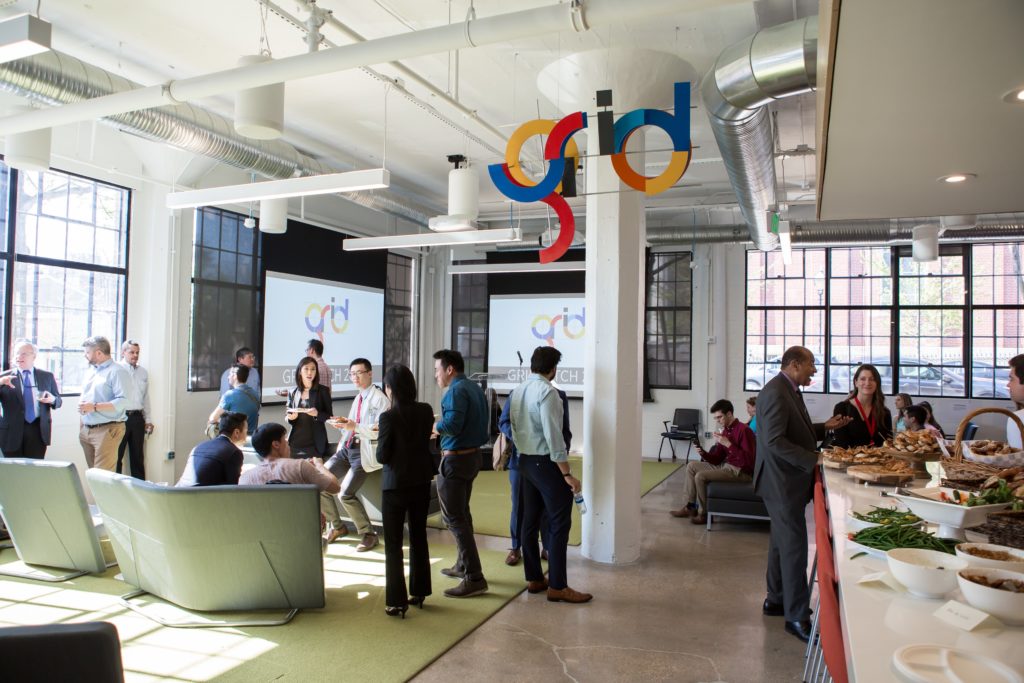
The Graduate Research Innovation District (GRID) offices
Another challenge was the hesitation of the UMB administration to share statistical information for fear that this work would create adverse publicity. The multidisciplinary nature of the STARBIOS2 project also creates tension, and the question was raised whether a senior virologist was now studying “sociology” rather than “virology”.
Focus on Public Engagement
Public Engagement is valued highly by the UMB, and the university has an office of Community Engagement that provides educational programs, job training and health care for the underserved neighborhoods surrounding the University. There are also several Global Programs on the campus that promote health delivery and health education all over the world. There are also programs promoting business development and technology transfer from University inventors to businesses outside the University. The STARBIOS2 team analyzed these efforts (Local, Global, and Commercial) to find ways they could be improved.
Overcoming obstacles
To put initiatives into the UMB “Strategic Plan” one must work through the Faculty Senate. One initiative popularized by a Science article on Sexual Harassment (Greider et al, 2019), was that offenders should be publicly labeled as such so that granting agencies would know of their malfeasance. Our Faculty Senate agreed to incorporate this idea, but it was never implemented. The UMB continues to investigate harassment but apologies are never public and only occur behind closed doors.
Promoting “Public Engagement” was already an organized effort on campus and it was not clear how the STARBIOS2 project could give input to this process, but representatives from several university offices and functions did engage (strategic planning, clinical and translational research and technology transfer).
Action plans in action
Three STARBIOS2 streams of action were designed to advance Gender Equity, Public Engagement, and Education. Plan 1 (Gender Equity) was designed to influence Strategic Planning through the Faculty Senate to adopt gender equity recommendations by (Greider et al. 2019.). These recommendations were adopted by our Faculty Senate. However, the recommendation stating that those who commit sexual harassment are to be revealed as offenders to public funding agencies was not implemented.
Plan 2 (Public Engagement) included holding a workshop on Technology Transfer as a form of Public Engagement. The UMB fosters local tech transfer efforts through 1) the Jacques Initiative (delivering AIDS and hepatitis care for the neighborhood) just moved to a better space in the hospital that includes a new “Journey Center” providing social support for those taking meds. And by 2) supporting the CURE afterschool medical program for high school students. Another form of Public Engagement is to foster global tech transfer effort through 1) training young Nigerians to use viral diagnostics, and by 2) promoting efforts of CIHEB, health initiatives in Africa that address AIDS and other infectious diseases. Technology transfer from the University to Biotech industry is fostered by 1) promoting vaccine and diagnostic efforts for Lassa and nCoV-2019, and 2) promoting licensed vaccines in a rational disease prevention program.
Plan 3 (Education) was designed to expand the University educational opportunities on Entrepreneurship. This included expanding an entrepreneurship course currently serving only 12 students per year. In addition, activities were designed to help the University to establish the Graduate Research Innovation District (GRID), an incubator space for Start-up businesses and economic revival of the neighborhood adjacent to the University, where small businesses offer internships to students and neighborhood residents.
What we learned
While some administrators tend to be overly cautious and conservative, it is gratifying to find those who are open to suggestions and willing to initiate change. It is especially surprising how much enthusiasm and energy can be tapped by involving graduate students. They are open to finding ways in which to make their job training in “Research and Innovation” more relate-able to the Public, more Ethical, more Openly accessible, and more gender-inclusive.
Implementing responsible research and innovation (RRI) in bioscience research institutions requires different strategies depending on the context. In this blog post, the STARBIOS2 team at FIOCRUZ in Brazil share their lessons learned from participating in the project. You can also find their story on our YouTube channel, along other presentations from the STARBIOS2 final event.
Main challenges
At the beginning of the STARBIOS2 project, the term Responsible Research and Innovation (RRI) was not yet widely adopted and disseminated at Fiocruz, but many common practices fit within the spirit of RRI to make science and technology (S&T) more responsive, reflective, inclusive, open to social demands and more socially responsible. Therefore, the main challenges were defining action plans to make and adjust already existing practices in Fiocruz more systematic and relevant to the institution.
Focus on Education
Fiocruz is the main institution non-university on training and qualification of human resources for the Unified Health System (SUS) and for science and technology in Brazil. Thus, education is one of the pillars of Fiocruz and we have focused our main activities on this field, through courses, workshops for discuss RRI concepts and training for technology transfer and capacity building.
Overcoming obstacles
Since Fiocruz’s focus is to produce, disseminate and share knowledge and technologies aimed at the strengthening and consolidation of the Unified Health System (SUS) and contribute to the promotion of health and quality of life of the population, we had no problems in proposing measures to disseminate RRI concepts in the institution. Our main difficulty was to ensure the adherence of the public, among them postgraduate students, to the proposed activities.
Action plans in action
During the four years of the STARBIOS2 project, we worked in all key areas of RRI. Within the field of education, we promoted an event called MOBAH that aims to discuss with the various sectors of society the current status of Sexually Transmitted Infections (STI) and publicize the new directions in the field of HIV testing, collaborating with the fight against these epidemics.
Based on our experience with the STARBIOS2 project, we started to include courses for technology transfer in research projects training. For example the “Nanopore-based gene sequencing technology for temporal investigation and epidemiology of dengue outbreak: training, research, surveillance and scientific dissemination” in which we approach techniques used during our activities related to the epidemiological surveillance of arboviruses circulating and co-circulating in Brazil.
RRI action in all RRI keys
Our main activities were:
National workshop to promote the dissemination of the knowledge regarding the dissemination of HIV and HTLV;
Mobile genomics mission in Midwest Brazil;
Nanopore-based gene sequencing technology course for transfer technology and capacity building for the health workers of Central Health laboratories in Brazil to track the spread of emerging viral pathogens;
Academic course based on the RRI for PhD students at the Fiocruz focused on disseminating science and innovation;
Workshop on gender and public engagement at the FIOCRU focused on promoting structural changes.
Sustaining change
The concept of Responsible Research and Innovation (RRI) is a new approach to reinforce the interactions between science and society. This concept involves five key principles: Education; Open Access; Ethic; Social Engagement and Gender Equality. Our vision is that the insertion and sustained practice of these concepts in the institution will only be possible if current and new researchers are made aware of the importance of applying all these concepts. Therefore, we propose the implementation of a discipline in Fiocruz dedicated to postgraduate courses to work with the principles and application of RRI in Brazil.
What we learned
The participation in STARBIOS2 provided us with the ideal environment to reflect our research projects, as well as facilitates the practical insertion of Responsible Research and Innovation (RRI) into bioscience.
For 4 years now, we have been transforming institutions to foster responsible research. We have been is promoting responsible research and innovation in bioscience, using action plans, a sustainable model and guidelines that aim to make research more relevant, inclusive and effective for citizens and businesses.
We were able to recruit over 180 participants from 5 continents for our final event on May 29. Now, we are being highlighted as a recent success story in EU-funded research and innovation. Confirming that we have succeeded to make an impact in the direction of responsible research and innovation in research institutions in Europe. But also in the US, South Africa and Brazil.
For those of you who are interested in learning more about the STARBIOS2 project, the video recordings of the final event are coming very soon. Until then, you can find more information on what we did and how in the STARBIOS2 guideline book, available for download on our publications page. Or by watching the recordings of our webinars from early 2020.
“Taking on an approach such as RRI is not simply morally recommendable, but indispensable for attempting a re-alignment between scientific research and the needs of society. […] [A]s the Covid-19 pandemic is challenging our societies, our political and economic systems, we recognise that scientists are also being challenged. By the corona virus as well as by contextual challenges. The virus is testing their ability to play a key role to the public, to share information and to produce relevant knowledge. But when we go back to ‘normal’, the challenge of changing science-society relations will persist. And we will remain convinced that RRI and similar approaches will be a valuable contribution to addressing these challenges, now and in the future.”
Structural change towards responsible research and innovation looks different depending on institutions’ political, social and cultural context. This blog post tells the STARBIOS2 RRI story of our colleagues at University of Bremen. Want to learn more about what the STARBIOS2 project has been doing in the past 4 years and what we learned from implementing RRI in 6 European bioscience research institutions. Come to our virtual final event 29 May!
MAIN CHALLENGES
Our goal was to raise awareness and initiate structural change in regard to Responsible Research and Innovation (RRI) at the Faculty of Biology and Chemistry at the University of Bremen. The challenges we had to overcome:
The development of a common shared RRI vision in a whole-institutional-approach.
The activation of those affected (students, researchers, stakeholders) in a bottom-up – top-down process.
The identification of supportive and hindering structures and coping with obstacles
FOCUS ON SCIENCE EDUCATION
We chose Science Education as an important trigger to attain the RRI issues Public Engagement, Gender, Ethics, and Open Access. Based on an inclusive communication model for biosciences we developed a series of reflective activities to encourage discussion and critically questions about what is responsible and conscientious practice within the scientific domain. The reflective activities about societal engagement, contextualization of research, open access publication, gender in research, and ethics in science communication were evaluated with different target groups (students, doctoral students, researchers).
In addition, we developed a comprehensive educational model that formed the basis of RRI educational modules in cooperation with the Graduate School NanoCompetence, scientists of molecular biology and marine biology. These modules were tested and evaluated with adolescents within the didactical outreach lab.
University students are nascent researchers who should acquire knowledge and skills need to work responsibly during their academic experiences and careers. Therefore, we integrated elements of “research based education” and “research-informed teaching” in the bachelor’s and master’s biology programs. Science chats and doctoral seminars allow doing and expiring dialogical reflections on research and innovation and open a perspective with the wider society. Especially in the doctoral program of Science Education RRI issues are reflected and became part of first doctoral theses.
OVERCOMING OBSTACLES
Responsible Research and Innovation (RRI) represents a contemporary view of the connection between science and society. The researchers share this view to different degrees. Some also see Humboldt’s ideal of ”freedom of research” threatened – especially when it comes to discussions about public engagement. While there is broad consensus on questions of ethics in scientific communication, aspects relating to gender in research and open access are discussed controversially. Above all, the collaboration with ”external experts” from different areas of the university (e.g. equality center, science transfer, university library) helped to clarify questions and to develop an RRI vision tailored to the faculty.
ACTION PLAN
Our action plan included 7 major streams:
Setting up criteria for successful societal engagement and technology transfer
Promoting societal engagement through socioscientific contextualization
Education to raise the awareness of RRI Keys
Raising awareness of gender issues
Raising awareness of ethical issues
Promotion of open access
Setting up an RRI mission statement at faculty level
ACHIEVING GOALS
We started with a comprehensive state-of-the-art analysis of literature and research programs, interviews with different status groups, and a questionnaire survey. From the findings, we deduced criteria for first recommendations. As a next step, we developed educational building blocks (reflective activities, RRI modules) in regard to the RRI keys and tested and evaluated them with different target groups. The formed the basis of the RRI educational interventions. The findings contributed to further development of RRI recommendations and the RRI future concept (RRI vision) of the faculty. For structural transformation and initiation of change we mainly reached our goals: fostering sensitiveness and awareness about RRI through dialogue, offering lectures, and transparency via a local website, good practice examples, and a booklet of RRI recommendations.
SUSTAINING CHANGE
A local website with educational building blocks and information about RRI issues.
Elster, D, Barendziak T., Birkholz, J. (2019). Towards a sustainable and open science: Recommendations for enhancing RRI in the biosciences at University Bremen, Bremen, University press.
Starbios2 and RRI issues have become part of the faculty’s future concept 2025
A family room
Close cooperation with the gender representatives for the development of a gender equality plan (work in progress).
African initiative in cooperation with the University Zanzibar: Teaching ways to healthy nutrition: Professionalization in the context of sustainable health education in Zanzibar (Saskia Tenberg, Soerge Kelm, Doris Elster, Antje Hebestreit)
WHAT WE LEARNED
Education can be a successful trigger of RRI structural change processes; open your perspectives – get support helpful, university-internal structures (external experts); take a whole-institutional approach with a bottom up-top down process; last but not least: recognize that change needs time.
“Covid-19 and Open Science” will be an opportunity to learn from and discuss Open Science approaches, methodologies and best practice used by STARBIOS2 partners involved in fighting the novel coronavirus and Covid-19. Join us on 29 May 2020, at 18:00 CEST!
Directly following the STARBIOS2 final event on 29 May, we organise a special event on Covid-19 and Open Science. The Covid-19 pandemic caused by the new coronavirus (SARS-CoV2) has reinforced data sharing, communication and collaboration within international research communities. Challenging, in a positive way, the utilization of open science approaches and methodologies.
Speakers include…
The UNESCO chairs for Covid-19 Ahmed Fahmi, UNESCO
Title to be announced Eva Méndez, University Carlos III, Madrid
Targets of T cell responses to SARS-CoV-2 coronavirus in humans with COVID-19 disease and unexposed individuals Alessandro Sette, La Jolla Institute for Immunology, CA, USA
University students partnership during Covid-19 epidemics in Cameroon Jules-Roger Kuiate, Evangelic University of Cameroon
The Covid-19 Tor Vergata Joint Laboratory Vittorio Colizzi, professor of Immunology, University of Rome Tor Vergata, director of the UNESCO Chair of Biotechnology & Bioethics,Coordinator of the Tor Vergata Covid-19 Joint Lab
Open Science is a new approach to the scientific process based on cooperative work and new ways of diffusing knowledge through digital technologies and collaborative tools. With the goal of making scientific research available to all. A goal that could be accomplished by publishing open scientific research, campaigning for open access, and making it easier to both publish and communicate knowledge and new findings.
Finding ways of making research more transparent and accessible during the research process has become incredibly relevant for research about SARS-CoV2 and Covid-19. Open notebook science, citizen science, crowdfunding and open source software is more relevant than ever.
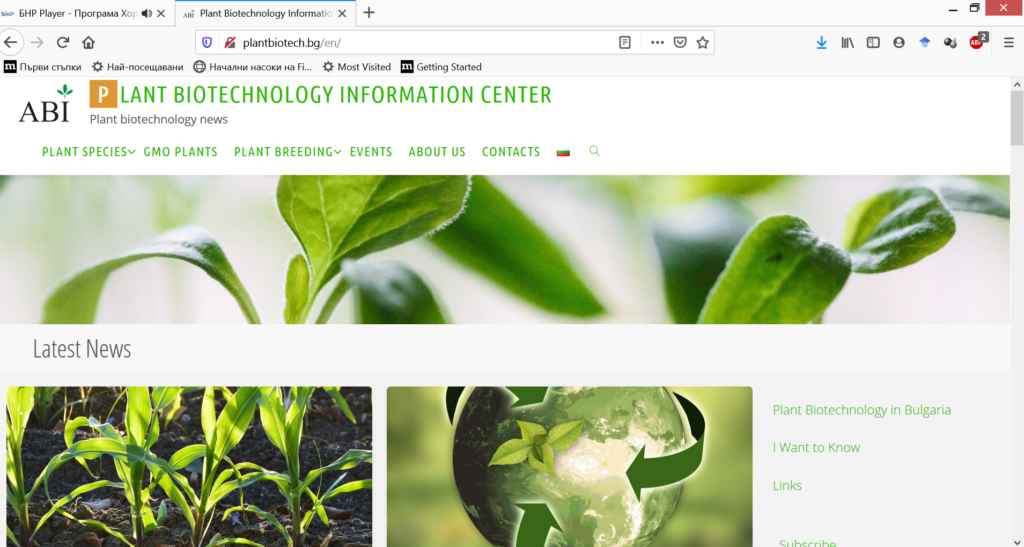
Within the scope of STARBIOS2, the Plant Biotechnology Information Centre at Agrobioinstitute in Sofia, Bulgaria organised the third national annual essay contest for young people. This year 234 students from Bulgarian secondary schools, high schools and universities answered the call. The 2020 edition topic was “Climate is changing! And me?”. Essays from 53 Bulgarian towns were submitted and Bulgarians studying in Italy, Spain, Cyprus and the Netherlands also participated and elaborated their thoughts on climate change.
“What was most interesting was the students’ personal attitude to the problem. They showed readiness and enthusiasm not only to ‘think globally’ but to ‘act locally’ to improve the environment. Starting in their own homes, backyards, schools, towns, and counties. And more importantly, doing their best to convince their families and friends to join them in their efforts” says Dimitar Dijilanov, professor at Agrobioinstitute and lead of PBIC and the STARBIOS2 work in Bulgaria.
The winner essays are already available for download. Unfortunately, the official award ceremony will have to be postponed due to the COVID-19 outbreak. The Bulgarians are currently in quarantine. But soon, the winners will be able to receive their proper congratulations and awards.
“We are grateful to all students who submitted their essays, to their teachers, tutors and parents for this record breaking number of essays and their positive response,” says Dimitar Dijilanov.