


RRI action on #PublicEngagement at ICGEB, Cape Town

Editorial TeamRRI

Different contexts, different approaches to RRI. In this blog post, International Centre for Genetic Engineering and Biotechnology (ICGEB) node in Cape Town describes their STARBIOS2 RRI approach. Find our more about the ICGEB approach in their chapter of the STARBIOS2 guideline.
Main challenges
The magic of the foldscope

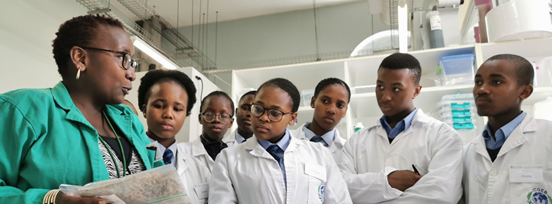
In the busy and multi-dimensional schedule of a scientific institute, finding time to engage with the public is a challenge. Restructuring roles within the institute to have a dedicated person at the ICGEB Cape Town component, responsible for our communication and public engagement activities has resulted in increased public engagement.

Focus on Public Engagement

Contributing to a vibrant scientific community and disseminating knowledge and enthusiasm for science to the public are concepts integral to the ICGEB mission.

Action plans in action
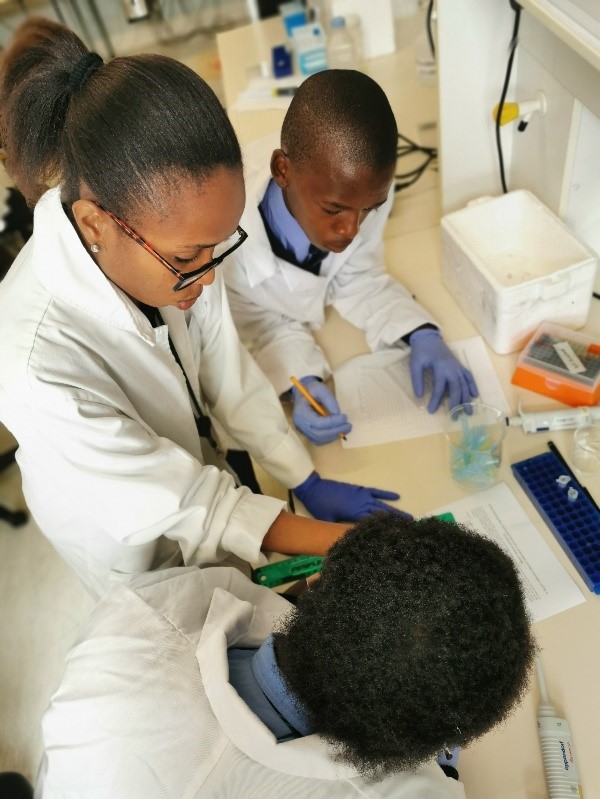
ICGEB is actively engaged in disseminating science to the public. Our scientists, staff and students volunteer to participate in science fairs and events and to support local, national and international outreach activities, thereby enriching our work, deepening our contribution to the wider society, and aligning our mission to our environment.

ICGEB also promotes public engagement and communicates science through the ‘Science & the City’ series. Lessons, meetings, courses and seminars organised by ICGEB are distributed freely through podcasts and on iTunes U, Apple’s digital platform. Collections cover topics from cancer research to stem cells, from basic molecular biology to cardiovascular diseases. Each month, over 11,000 users preview and download ICGEB’s scientific Films in over 80 countries worldwide.

The ICGEB Cape Town Component will be launching Science & the City, Cape Town.
The first event in the series was scheduled to take place on 18 March 2020, but had to be postponed due to the COVID-19 outbreak. A new date has not yet been set.

Looking to the future
Cape Town Science & the City will be a yearly event that we hope will grow into a public lecture series. We are dedicated to encouraging and stimulating interest in Science among young and old by opening our laboratories for visitors and supporting an open relationship with the public.

What we learned

It is gratifying to find that most of our Scientists and students are willing and eager to engage with the school learners and general public. There is a great need to expose learners in South Africa to scientific activities in order to encourage interest in science. Showing that science is indeed for everyone. 

More: https://www.icgeb.org/outreach/events/

RRI action on #OpenAccess and #PublicEngagement at the University of Primorska

Editorial TeamRRI

What does RRI look like at the youngest public university in Slovenia? And more specifically, in biodiversity? Find out below, where the STARBIOS2 team at University of Primorska share their experiences. Read more about it in our guideline.

Main challenges

The University of Primorska (UP) is the youngest public university in Slovenia. Therefore, at the beginning of the STARBIOS2 project, the connection between the university, the researchers and the local community was weak. Moreover, the concept of responsible science was not yet fully established in everyday research and academic work. There were several challenges to overcome, for example, there was no formal RRI training included in BSc and MSc programmes. There was also a lack of understanding of open access among scientists, and we did not have any official document, such as a code of conduct, covering ethically sensitive work in conservation biology.

Open Access workshop organised with InnoRenew CoE

Engagement and open access

We have focused our activities on public engagement. Through the action plan, the STARBIOS2 team was able to increase awareness of biological scientific research in the local area by organising various events. We also worked to increase the participation of different stakeholders in the activities of the faculty. The aim of our activities was to increase acceptance and make different applications of life science research more understandable for end-users and the general public. In particular, the organisation of events on the “Growing UP in the Universe” helped to strengthen the link with local actors. Indirect activities, such as meetings with stakeholders from industry, government representatives and authorities on the local and national level, international research institutions and other actors have contributed to increased awareness and recognition and provided opportunities for RRI implementation at the university, including open access publishing.

Overcoming obstacles

Many researchers were unaware of the importance of open access publishing. Many of them published in journals they knew well in their respective fields, without searching for additional opportunities to publish in open access journals, or deposit results in an open access repository. By organising a workshop, we were able to increase knowledge of open access strategies. Moreover, through negotiation processes at the university level, and the establishment of a working group on open access at the university, the team were able to raise awareness and argue for the establishment of a functioning repository at the university.

Action plans in action

During the four years of the STARBIOS2 project, we have conducted various workshops, lectures, training sessions and stakeholder meetings to strengthen the link between science, research, and society. We have mobilised key actors such as the Ministry of Labor, Family, Social Affairs and Equal Opportunities, the university leadership, local society and representatives of the economy to help us manage institutional change. Most importantly, we have connected the university and research with the local community.

Achieving goals

We have observed increased awareness and better recognition of our research by the increasing participation of local members of the public in our Growing UP in the Universe events. In addition, researchers have become more aware of the need for open science and open data, and their work is now publicly accessible in the university repository. We are training a new generation of researchers in conservation biology equipped with RRI-based knowledge to maintain and improve the open science concept and to further link science and society. 

Sustaining change

Our action plan was designed to be implemented in three main phases. First, at the beginning of the project, we wanted to evaluate the situation in all five RRI key areas in order to create a starting point and assess progress. Second, we designed activities for each key that were targeted at different audiences who are capable of implementing RRI and making it sustainable. In third and last phase, we aimed for institutional change and to make the action plan sustainable in the future. Each activity was aimed at achieving sustainability of the action plan by implementing RRI in daily work at the university. For example, we changed the curricula of three courses to include RRI in the formal education of students. We also promoted a university open access repository, and the university adopted a Code of conduct for biosciences.

What we learned

Our experience in the project showed us that in order for the implementation of some of the RRI keys we need to use not only a bottom-up but also a top-down approach. Strong cooperation with the Ministry of Labour, Family, Social Affairs and Equal Opportunities was essential to support the sustainability of gender equality. It gave us the opportunity to establish new network connections with highly relevant actors in the country. The establishment of a network of “gender-oriented institutions in Slovenia” together with the Network Slovenian Academy for Science and Arts creates opportunities for positive changes in the future.

RRI action on #AllRRIKeys at Agrobioinstitute, Sofia, Bulgaria

Editorial TeamRRI

RRI implementation needs different approaches in different contexts. The STARBIOS2 guidelines offer many examples of this. Based in Sofia, Bulgaria, and with expertice in plant science, this is an overview of Agrobioinstitute’s experiences implementing RRI.

Main challenges

The main challenge was related to the fact that we promoted structural change by developing a new structure: The Plant biotechnology Information Center (PBIC). In this new structure, the STARBIIOS2 project’s core team took on a double role, making science and promoting RRI in science at the same time!

Focus on Full RRI package

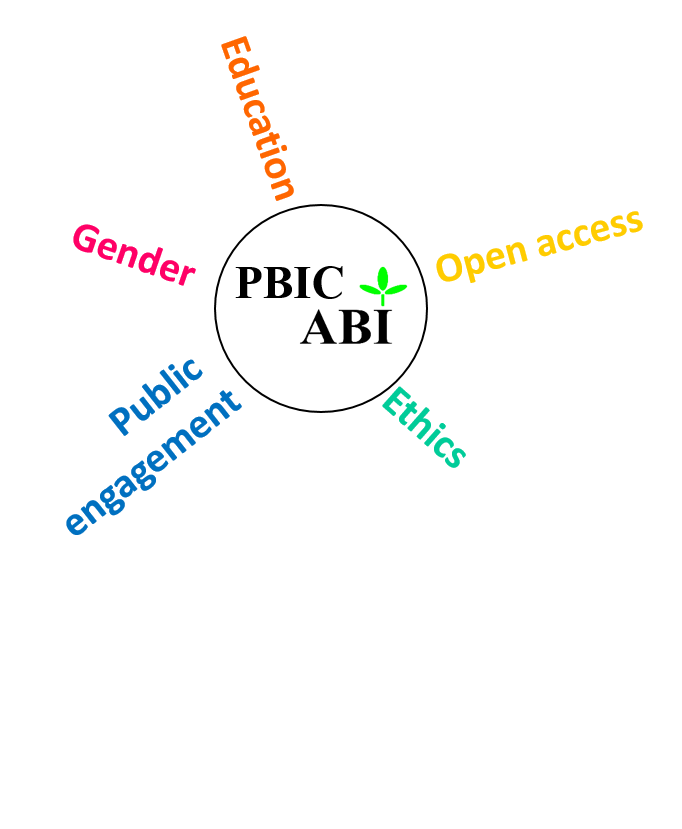
The PBIC was established as a focal point and to serve as the engine for all RRI activities of the Agrobioinstitute, both internal activities and our outreach. We decided to develop activities to cover all RRI keys: Public engagement, gender, open access, science education, and ethics.

Overcoming obstacles

There was a lack or limited experience in RRI activities, both within the ABI team and in the Bulgarian scientific society as a whole. We also needed to deal with a deep societal distrust to modern plant biotechnology approaches. Furthermore, both young people, and a predominant part of the educational system, seem to lack interest in plant science, which hampered active networking with schools and universities.

In addition, we had difficulties convincing scientists to communicate with the public, and the response from public institutions and administration was slow, and sometimes a bit “clumsy”.

Another major obstacle that plant bioscientists need to navigate is related to public distrust, and prejudice about GMOs – a problem coming from the broad public, media, environmentalists and other non-governmental organisations. What makes this particularly challenging is that this hurdle is to be considered there as a rule, not an exception.

Action plans in action

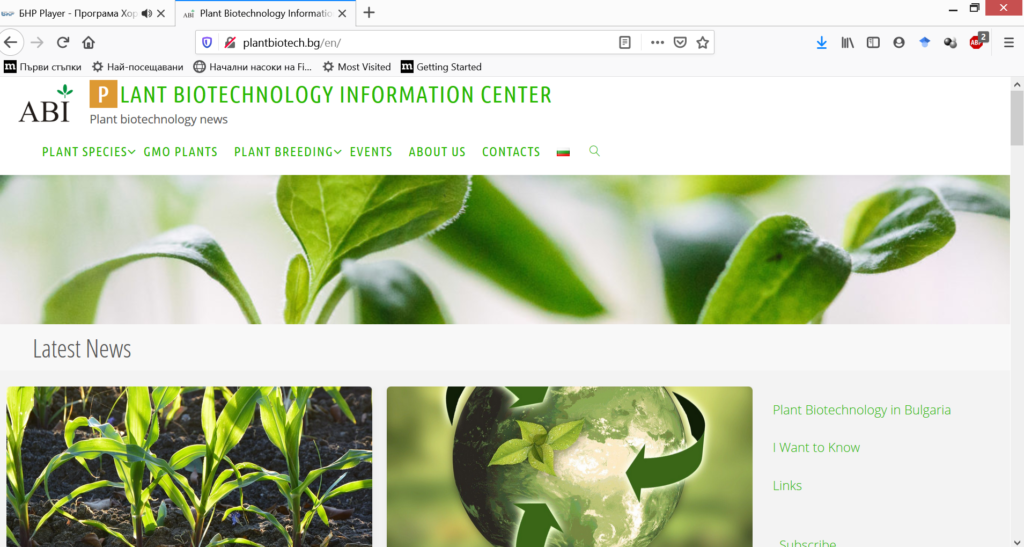
The PBICwas established as a permanent structural unit of ABI. A dedicated website was developed: plantbiotech.bg, which is available in both English and Bulgarian and updated regularly.

The action plan included a set of outreach activities for all RRI key areas.

Public engagement: Networking with governmental and non-governmental organizations; promoting plant science via PBIC web page; organization of various public events.

Science education: Activities focused on young generations, i.e.  lectures in schools and at universities; laboratory practice for high school students on the ABI premises; three national essay contests that have covered various topics and engaged numerous participants.

Inside the ABI, we focused on open access, ethics, and gender. We developed an open access policy plan for ABI covering both development and implementation. For ethics, we developed and implemented an ABI Code of Ethics and professional conduct in plant science and established an institutional Commission on Ethics. In addition, we developed specialised professional training on bioethics for young scientists. In relation to gender, we performed a survey about gender equality in ABI covering all staff. The results and their in-depth evaluation did not show any gender-related issues in respect of the position and role of women in plant science in Bulgaria.

Sustaining change

Sustainable maintenance of the PBIC and the plantbiotech.bg web page is important as this has been a focal point of all ABI RRI activities and our networking with society.

We have also managed to achieve sustainable institutional change, where all ABI publishing activities adhere strictly to the Open Access policy plan. In addition, all scientific activities will be performed in accordance with the Code of Ethics and professional conduct in plant science of the ABI, and the Commission on Ethics will take action when appropriate.

What we learned

Working on RRI is not that easy when you are a newcomer ☺! But when you manage to do it, a multidisciplinary approach is needed in all RRI actions, and this is particularly important in bioscience! Moreover, It is important to work in close collaboration with partner structures, more experienced in the field (as we did in STARBIOS2 team), to establish a good core team and a proper RRI Action plan, that is tailor-made for the specific organisation. Last but not least: When you work with enthusiasm and patience, sustainable change can be achieved!

RRI action on #Gender at University of Oxford & NIHR Oxford Biomedical Research Centre

Editorial TeamRRI

Two large organisations unite to achieve structural change towards responsible bioscience. This is the story of how University of Oxford and NIHR Oxford Biomedical Research Centre implemented RRI, with a special focus on gender equity, in bioscience research institutions that already subscribed to the RRI concept.

Main challenges

  • Achieving structural change in a very large organization with comparatively small resources relative to the size of the organization.
  • Aligning our activities under the RRI banner with many other similar activities driven by different actors under different banners.
  • Address all five RRI keys simultaneously with limited resources and time.

Focus on Gender

We focused on gender because it was tied into the objectives of our organisation under the remit of our funder – the National Institute of Health Research (NIHR). The drive to develop and implement Athena SWAN gender equality action plans in our organisation provided an opportunity to make a valuable contribution to the ongoing activities. The project catalysed change by aligning its objectives with the objectives of Athena SWAN. The most significant example of structural change has been benchmarking gender as part of the organisational performance metrics.

Overcoming obstacles

Given that activities pertaining to all five RRI keys were already well established in our organization before the project, we did not have to convince internal stakeholders of their value. Our main obstacle was to develop enough capacity to catalyse change because the work packages were ambitious and lacked sufficient resources to achieve change at scale. We overcame this obstacle by securing strong support, additional resources, and staff time from the NIHR Oxford BRC.

Action plans in action

Our action plan included ten major streams of action (SoAs):

  • SoA A: Review of the effectiveness of societal engagement in biomedical research and innovation.
  • SoA B: Engaging with technology transfer within the NIHR Oxford BRC.
  • SoA C: Development of new metrics to assess markers of achievement for women in translational medicine settings.
  • SoA D: Qualitative study of women within the NIHR Oxford BRC.
  • SoA E: A gender analysis of authors in scientific publications in NIHR Oxford BRC.
  • SoA F: Scoping and encouraging the use of gender and sex as key variables in the research programmes.
  • SoA G: Evaluating opportunities for lectures, seminars or workshops on RRI and disseminating RRI.
  • SoA H: Evaluating open access and developing a framework for comparison.
  • SoA I: Ethics at the edge of consent: capacity, consent and vulnerability.
  • SoA J: Ethics, big data and research data governance.

Achieving goals

We have achieved the planned goals in all SoAs, but with a varying degree of success. The most significant structural change and impact has been achieved in gender-related SoAs. Given the emphasis at our institution on the evidence-based approach, we have captured and disseminated our major results in Open Access:

  • Ovseiko PV, Pololi LH, Edmunds LD, Civian JT, Daly M, Buchan AM. Creating a more supportive and inclusive university culture: a mixed-methods interdisciplinary comparative analysis of medical and social sciences at the University of Oxford. Interdisciplinary Science Reviews. 2019;44(2):166-191. doi: https://doi.org/10.1080/03080188.2019.1603880
  • Henderson LR, Shah SGS, Ovseiko P, Dam R, Buchan AM, McShane H, et al. A survey to explore new markers of achievement to assess and monitor gender equity in an NIHR Biomedical Research Centre: A two-factor model. medRxiv. doi: https://doi.org/10.1101/2020.02.04.20020347
  • Dam R, Shah SGS, Milano MJ, Edmunds LD, Henderson LR, Hartley CR, et al. A retrospective analysis of gender parity in scientific authorship in a biomedical research centre. bioRxiv. doi: https://doi.org/10.1101/2020.02.24.962175
  • Kalpazidou Schmidt E, Ovseiko PV, Henderson LR, Kiparoglou V. Understanding the Athena SWAN award scheme for gender equality as a complex social intervention in a complex system: analysis of Silver award action plans in a comparative European perspective. Health Research Policy and Systems. 2020;18(1):19. doi: http://dx.doi.org/10.1186/s12961-020-0527-x

Sustaining change

We have developed a Sustainability Plan focusing on gender to sustain change beyond the duration of the project, identified internal resources, and applied for funding to implement it.

What we learned

Aligning our actions with the similar ongoing activities to catalyse change has worked best.

Learn more about the Oxford University & NIHR Oxford Biomedical Research Centre team on our partners page.

UOXFNIHR
Gdansk team

RRI action on #Gender at University of Gdansk

Editorial TeamRRI

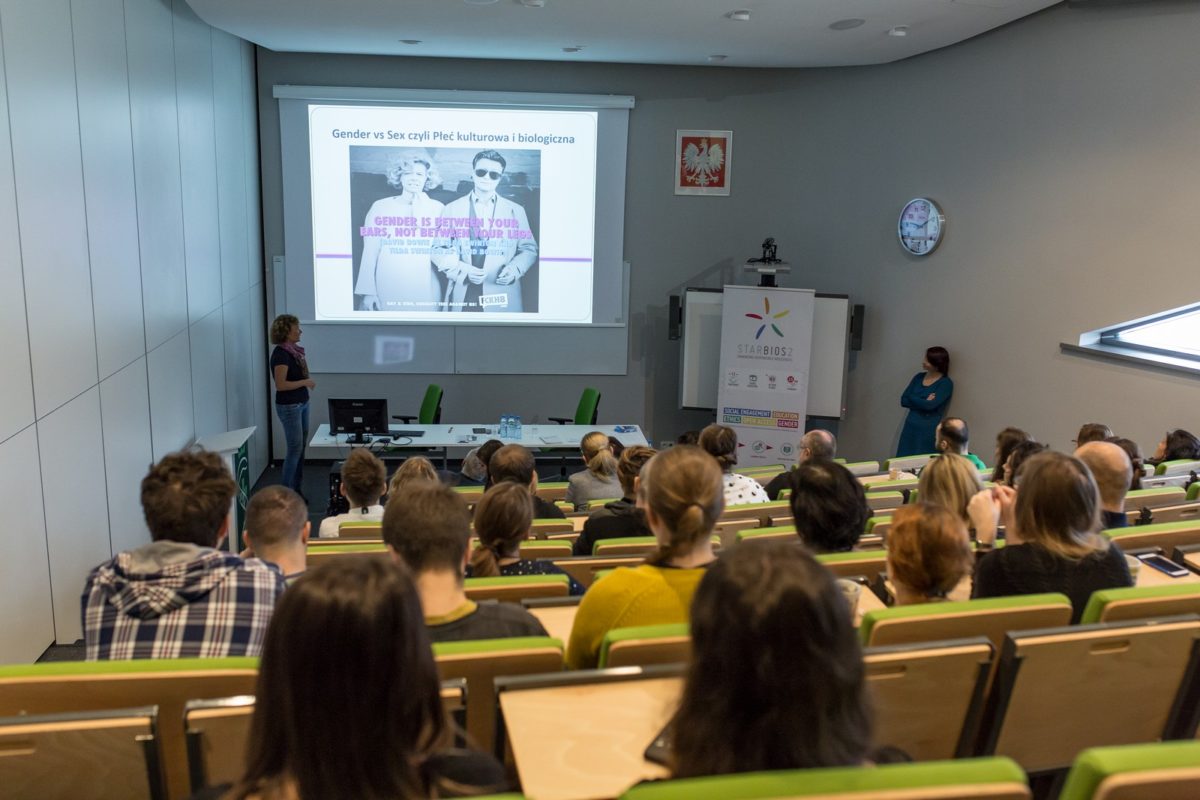
The University of Gdansk started their STARBIOS2 journey with a set of pilot actions, already planned for bigger things. Deciding to focus on the RRI key of gender, they managed to obtain structural changes on the institution-wide level with united efforts of a complex project team consisting of members of different faculties and units passionate about introducing long-term changes.

Main challenges

For all key areas of RRI, including gender, the main challenges arose from the fact that STARBIOS2 activities at the University of Gdańsk (UG) were planned as pilot actions for the Intercollegiate Faculty of Biotechnology of University of Gdańsk and the Medical University of Gdańsk (IFB). With the aim to test internally, and later on transmit these actions as a trigger for change to other bioscience-related faculties, and even further onto the university wide-level.

Focus on Gender

Our focus on gender was intersectional as it overlaps with other important roles women and men undertake. We considered gender of the researcher, student, the management level in the institution and role-models. 

This meant we investigated the needs for support in career development. We also considered the number of male and female staff at IFB, and the different obstacles to research careers that might result from gender stereotypes. We stressed the fact that teaching curricula should be designed so as to give equal chances for both men and women. This includes developing an understanding of the meaning of tailored training in leadership skills. In addition, we promoted role models of both male and female scientists, showing researchers that a good work-life balance has a positive effect on facilitating gender equality in institutions.

Gdansk team
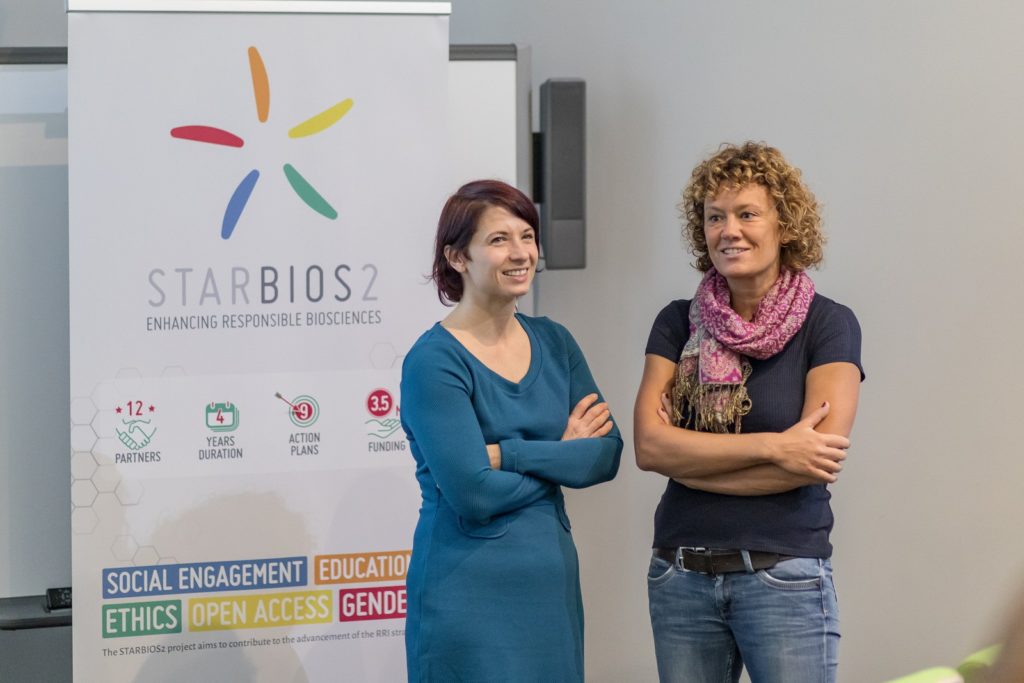
Natasza Kosakowska-Berezecka & Magdalena Żadkowska, members of the extended core team at University of Gdansk

Overcoming obstacles

The obstacles, which occurred throughout the process of implementing actions at UG, were to some extent connected with gender stereotypes that influence the concepts of what men/women should and should not do, and that also have a strong effect on leadership structure. To reduce the impact of these stereotypes on the career development, management structure, or studying path, STARBIOS2 team experts provided  recommendations for the UG authorities to introduce diversity management training for administration and scientific staff, and to facilitate gender equality plan in the institution.

Action plans in action

Certain planned actions at UG focusing on gender concerned developing specific actions targeted at advancing career possibilities for women researchers. The actions included, among other things, investigating the needs for support in career development and taking into account the gender perspective. A series of interviews were conducted with the researchers at IFB. Based on this, our team of experts from Social Science Faculty formulated recommendations and provided training and career development tools for both women and men. A “Gender gap in biotechnology” report was published and presented on several conferences throughout Europe and in Canada. Two workshops were conducted on managing diverse teams and self-presentation in respect of gender at IFB. These events were successful, and we repeated them during the Biotechnology Summer School and at the Universities of Bremen and Lviv. We also “showcased” successful stories of women researchers in bioscience during invited lectures and seminars.

Gdansk team

Achieving goals

Contribution of the particular actions taken within the scope of gender have been visible and caused tangible institutional changes. Several of the activities developed resulted in the appointment by UG Rector of a Committee for implementing policy of social responsibility; introduction of obligatory on-line RRI training for UG staff, researchers and students; building networks with other universities sharing good practices; opening a kindergarten for UG staff and student as a tool of strengthening career planning support.

Sustaining change

Our vision is to sustain the changes and processes that have been triggered by the STARBIOS2 project in the University of Gdańsk. One of the positive outcome which has resulted from the actions taken throughout the project was not foreseen initially in the development of  the action plans, but evolved as a result of the process of discussions and negotiations: namely the establishment of a formalized university-wide working Committee. The establishing of such a legitimated body has been discussed with the university authorities and will serve as a vehicle for the sustainability of our RRI actions.

Gdansk team

The Committee has agreed on working towards promoting University of Gdańsk as a young, innovative institution aspiring to the status of a leader of structural changes in the organisation in the field of Social Responsibility of Universities. In addition, it will be promoted as a model university applying good practices and introducing the standards of gender equality plans’ policy promoted by the EU as a distinction on the national arena among universities in Poland.

STARBIOS2 actions are a strong and potentially influential attempt to facilitate a structural change and build an environment that will be known as an open place, where diversity and equal chances for both women and men are important values.

What we learned

Implementing gender focused activities in order to obtain structural changes on the institution-wide level was possible due to the united efforts of a complex project team consisting of members of different UG faculties and units passionate about introducing long-term changes.

More: https://starbios.ug.edu.pl/

UG logo
RRI Tools logo

We’re in the RRI Tool(s)kit

Editorial TeamRRI

The STARBIOS2 guidelines on implementing responsible research and innovation have been picked up by RRI Tools and are now included in their toolkit. Follow the link below for practical guidance, inspiring cases and experiences, as well as materials, methods and tools!

We are also looking forward to our final event, where we will present the guidelines in detail and discuss with stakeholders. Join us in Brussels 27-28 April! Learn more and register for the STARBIOS2 final event.

STARBIOS2 is also organising a workshop in Cape Town, South Africa in March titled “The African and European Experience in Responsible Research and Open Science in Health and Biosciences: Towards a Common Vision?”

Get a sneak peek on what we will be talking about in Brussels and Cape Town by downloading our guideline from RRI Tools.

The guidelines aim to help readers formalize and trigger structural change aimed at introducing RRI-related practices that are appropriate to their own organisations. The  Guidelines are not a series of prescriptions, but an itinerary of reflection and self-interpretation that is addressed to different actors within the Biosciences.

From the RRI Tools summary about the guideline

The guidelines aim to help readers formalize and trigger structural change aimed at introducing RRI-related practices that are appropriate to their own organisations. The  Guidelines are not a series of prescriptions, but an itinerary of reflection and self-interpretation that is addressed to different actors within the Biosciences.

To support this itinerary of reflection and self-interpretation, the document provides (i) a description of a general RRI Model for research organisations within the biosciences, that is a set of ideas, premises and “principles of action” that define the practice of RRI in Bioscience research organisations, (ii) some practical guidance for designing interventions to promote RRI in research organisations in the Biosciences, putting into practice the RRI Model, (iii) a set of useful practices in implementing the structural change process, and (iv) information on particular STARBIOS2 cases and experiences, as well as materials, tools and sources, are also provided in the Appendix and in the Annex.

RRI Tools logo

Introduction and training on the model and guidelines developed based on lessons learned from the STARBIOS2 Project

Editorial TeamRRI

The STARBIOS2 project has developed a model for how to promote the practice of Responsible Research and Innovation (RRI) in bioscience research institutions. We have published a guideline document based on lessons learned. We now offer an introductory training on RRI in the biosciences and how to achieve structural change. We welcome you to two webinars with the practical experience of organisations that have implemented RRI action plans in focus.

The guideline document is available for download. For those of you who prefer interaction, we have developed training on our model. We offer two webinars on two separate occasions. Each of the webinars will last about one hour and includes both presentations and time for discussion.

In the first webinar, we present the STARBIOS2 project, what we did and why. We offer an outline of the model for RRI action that we developed based on the experiences form STARBIOS2 partners. We also share with you how bioscience research organisations outside Europe are practicing RRI, and how they have used the STARBIOS2 model.

In the second webinar, we present the process of structural change towards RRI. Here, you will learn what kinds of RRI action has been carried out by European STARBOIS2 partners.

More information and registration

What is RRI and the challenges of its practice in the Biosciences

Presentations prepared by:

  • Andrea Declich, University of Rome Tor Vergata (Italy)
  • Maria Salvato, University of Maryland (USA)
  • Mariet Wium, ICGEB (South Africa)
  • Doris Elster, Julia Birkholz University of Bremen (Germany)

20 January, 14:30 CET – Register here

3 February, 14:30 CET – Register here

The process of implementing RRI within Biosciences research organizations. Some lessons from experience

Presentations prepared by:

  • Andrea Declich, University of Rome Tor Vergata (I)
  • Carla Montesano, University of Rome Tor Vergata (I)
  • Marta Giovanetti, Luiz Alcantara and Fernanda Khouri, FIOCRUZ
  • Dimitar Djilianov and Dani Moyankova, AgroBioInstitute of Sophia (Bulgaria)
  • Rinita Dam, Pavel Ovseiko, Lorna Henderson, Sarwar Shah, Vasiliki Kiparoglou and Alastair Buchan, Oxford Univeristy (UK)
  • Sandra Potušek and Elena Buzan, University of Primorska (SL)
  • Krzysztof Bielawski, izabela raszczyk and Marta Dziedzic, University Of Gdańsk (PL)

27 January, 14:30 CET – Register here

17 February, 14:30 CET – Register here

About the STARBIOS2 model and guideline

The model was developed through an iterative process: Six European institutions in the bioscience sector have designed and implemented action plans to achieve RRI structural change in their own organisations. The implementation was part of a learning process, where the action plans generated new practical knowledge, that was fed back to amplify the structural change. Through his iterative learning process, STARBIOS2 partners have developed a model that we are now able to share with anyone who is interested in promoting responsible biosciences.

The guideline document represents one of the outputs of the STARBIOS2 project. The model builds on work carried out by the University of Rome Tor Vergata (Italy) that coordinated the work, Oxford University (United Kingdom), Agrobioinstitute (Bulgaria), University of Primorska (Slovenia), University of Gdansk (Poland), and University of Bremen (Germany). The teams received technical assistance from The Laboratory of Citizenship Science (Italy) Aarhus University (Denmark), Uppsala University (Sweden). The development of our model also included exchanges with experts outside the consortium, analysis of literature and documentation on similar experiences.

STARBIOS2 final event

STARBIOS2 final event: Save the date 27-28 April 2020

Editorial TeamRRI

The STARBIOS2 consortium will present results at a final event organised in collaboration with the European Association of Development Agencies (EURADA), at their offices on 24 Rue Montoyer, Brussels on 27-28 April 2020. The meeting starts after lunch on 27 April, and before lunch on 28 April.

What are the conditions for responsible research and innovation (RRI) in different research fields and geographical contexts? Join us in Brussels 27-28 April 2020 to discuss current changes in science as a whole and the social phenomena that challenge science.

Science and society relations are changing. At the STARBIOS2 final event in Brussels, we present the main results from STARBIOS2: our model and guideline for implementing RRI in bioscience research organisations. Launching indications for European policies and networking about the governance of science/society relations in different research fields and geographical contexts.

Want to join us? Register here!

Science: with and for society

Editorial TeamRRI

How does science communicate results to society? What strategies can recover the distance between science and civil society and at the same time guarantee adequate scientific information? Today, Responsible bioscience, a new association born at University of Rome “Tor Vergata” during the STARBIOS2 project, organises a public conference on the topic of disseminating science locally.

This text was originally published on the University of Rome “Tor Vergata” website (in Italian).

On December 18, university professors and researchers at University of Rome “Tor Vergata” meet with operators of the local social services and public entities, parent-school associations, medical specialists in childhood and adolescence, school teachers, and other stakeholders, to discuss responsible dissemination of science.

The conference will raise issues that are in the public debate, like prevention of infectious diseases (including sexually transmitted diseases), vaccines, and various forms of substance dependence. The event is organised by the Laboratory of Ethnographic Practices (LaPe) at the Department of Cultural Heritage and Training History and Society at the University of Rome “Tor Vergata” and by the Responsible in Bioscience Association, Department of Biology, at the same university.

The initiative is a collaboration with STARBIOS2. The Frascati Scienza, G.eco, Grande come una città, Scienza Insieme, and ScienzaPop associations will also be taking part in the event. They are all committed to creating opportunities for citizens and institutions to meet and discuss topics related to science. And they are active promoters of scientific dissemination, for example through workshops for children and young people.

Speakers include, among others, Vittorio Colizzi (Pathology and Immunology – University of Rome “Tor Vergata” – STARBIOS2 Project), Piero Vereni (Cultural Anthropology – University of Rome “Tor Vergata”), Anna Criscuolo (Gynecologist – University Tor Hospital Vergata) and Mattia della Rocca (General Psychology – University of Rome “Tor Vergata”).