The STARBIOS2 project has developed a model and guideline aiming to promote the practice of Responsible Research and Innovation (RRI) in bioscience research organisations. The model was developed through an iterative process: Six European institutions in the bioscience sector have designed and implemented action plans to achieve RRI structural change in their own organisations. The implementation was part of a learning process, where the action plans generated new practical knowledge, that was fed back to amplify the structural change. Through his iterative learning process, STARBIOS2 partners have developed a model that we are now able to share with anyone who is interested in promoting responsible biosciences!
The guideline document represents one of the outputs of the STARBIOS2 project. The model builds on work carried out by the University of Rome Tor Vergata (Italy) that coordinated the work, Oxford University (United Kingdom), Agrobioinstitute (Bulgaria), University of Primorska (Slovenia), University of Gdansk (Poland), and University of Bremen (Germany). The teams received technical assistance from The Laboratory of Citizenship Science (Italy) Aarhus University (Denmark), Uppsala University (Sweden). The development of our model also included exchanges with experts outside the consortium, analysis of literature and documentation on similar experiences.
The project is now in its final phase, where six non-European partners will use the learnings so far to implement action plans for structural change: Funcacao Oswaldo Cruz in Brazil, the International Centre for Genetic Engineering and Biotechnology (ICGEB) in South Africa, and the University System of Maryland, in the United States of America.
Today, 4 November 2019, our STARBIOS2 colleagues in Brazil host the event “Transformações Estruturais para uma Pesquisa Responsável e com Inovação”, which roughly translates to Structural Transformations for Responsible and Innovative Research.
At the FIOCRUZ event in Rio de Janeiro, participants will discuss the concept of responsible research and innovation with a new approach to reinforcing the connection between science and society. Focusing on gender equality and societal engagement from a Brazilian perspective. With lessons learned from the STARBIOS2 project, presented by Claudia Colonnello.
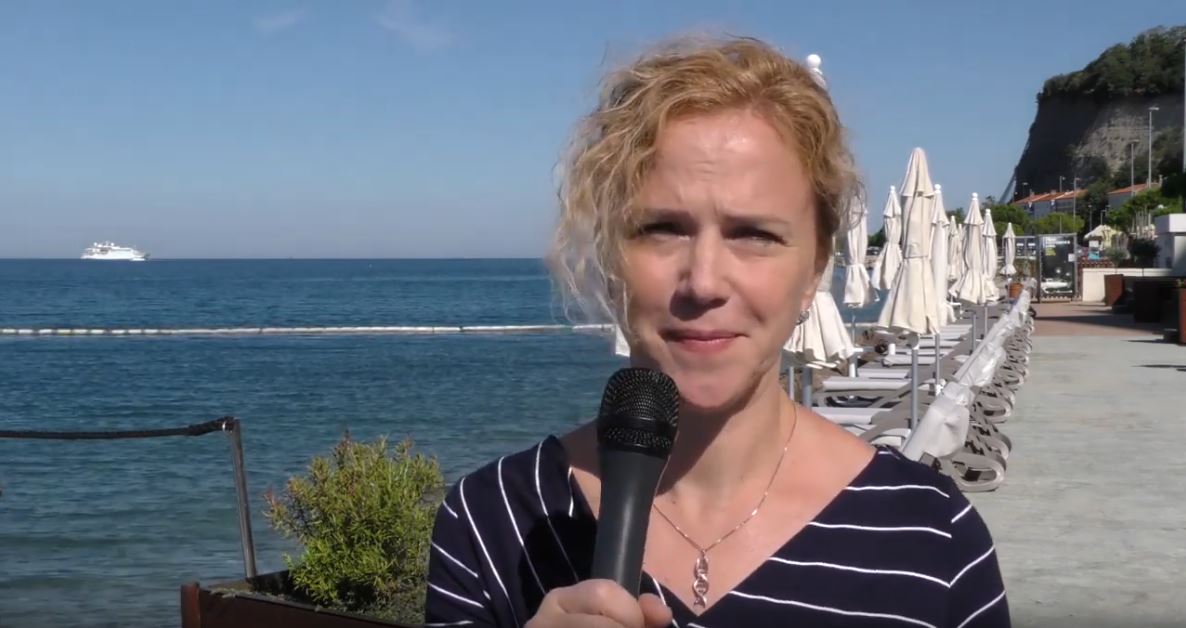
University of Primorska’s TV crew interviewed STARBIOS2’s Elena Buzan, Carla Montesano and Vittorio Colizzi in connection with the STARBIOS2 steering committee meeting in Portoroz, Slovenia. This is what they had to say.
Open science is not only open access to scientific literature, but includes open access to data, methodology, reviews and to educational resources. In the past two decades, the biosciences has advanced and produced discoveries like that have significantly improved our quality of life. But with rapid developments comes public concern. STARBIOS2 is looking to bridge this gap between science and society.
To ensure appropriate and ethical societal advancement, well-trained scientists and open science are essential parts to the process.
Elena Buzan
In the interview, Elena Buzan describes that we are witnessing remarkable development of biological sciences, which is on one hand inspiring, and on the other concerning, as we know that new technologies always pose a certain risk.
She continues to say that this enlarges the need for a new generation of scientists and a new responsible approach to open science. This approach involves different stakeholders and, above all, society in research development and decision-making processes. We are developing gene therapies to treat genetic diseases. We are creating and modifying new bacteria and microorganisms to clean environmental pollution. And we are developing different approaches in biology to solve energy problems. These new scientific findings are of utmost importance for the well-being and development of society. To ensure appropriate and ethical societal advancement, well-trained scientists and open science are essential parts to the process.
Open science and responsible innovation are topical and
very important issues guiding the development of international research policy
and practice.
In the interview, we also hear from Carla Montesano and Vittorio Colizzi.
We work to construct the right environment, with the right leadership and methodologies, for a new generation of scientists to grow up in.
Vittorio Colizzi
Vittorio Colizzi describes how we work to construct the right environment, with the right leadership and methodologies, for a new generation of scientists to grow up in. The University of Primorska has the capacity and potential to raise this new generation. To avoid a lack of alignment between science and society, we believe that the EU needs this new generation.
Carla Montesano raises examples from her own work and describes how her team has worked in Africa many times during epidemics. From their experiences there, they learned to work with society. To work with medical health professionals and leave the hospital structures and knowledge. To help the local community carry on the work without them when they leave.
We do the same thing in Italy. Like in most of Europe, we have a vaccine problem. To counter it, we engage with society. We explain how vaccines work and why it is a problem that people are not getting vaccinated. This, for us, is working with and for society.
Carla Montesano
In the interview, Carla Montesano says that “We do the same thing in Italy. Like in most of Europe, we have a vaccine problem. To counter it, we engage with society. We explain how vaccines work and why it is a problem that people are not getting vaccinated. This, for us, is working with and for society.”
Next time the STARBIOS2 consortium meet will be in Cape Town, South Africa, 17-18 March 2020. Then, they will discuss with stakeholders how to transfer knowledge and experience from the 6 action plans developed in European bioscience research institutions to African bioscience research institutions and bioscience policy making. ICGEB, one of the STARBIOS2 partners outside the EU, is organising.
The final STARBIOS2 event takes place in Brussels 22-23 April 2020. There,
the project will present their final results to the European Commission,
representatives of related research projects and to key people and
organisations driving the open science and responsible innovation strategies at
the European level.
Science is connected to society. Without this connection, European research is at risk. Last week, STARBIOS2 coordinator Carla Montesano was at ETHAC2019 alongside our monitor and evaluator Evanthia K. Schmidt talking about how to respond to this challenge.
We need to respond! We need to move our research focus and practice from a single living being, to including that being’s environment and the connections between the two.
Carla Montesano, STARBIOS2 coordinator
Focus is shifting from the study of a single element towards the study of living being biology in relation to the dynamic environment: the study of the Exposome. The same goes for laboratories. We are moving from small, linear organisations to larger, more dynamic organisations.
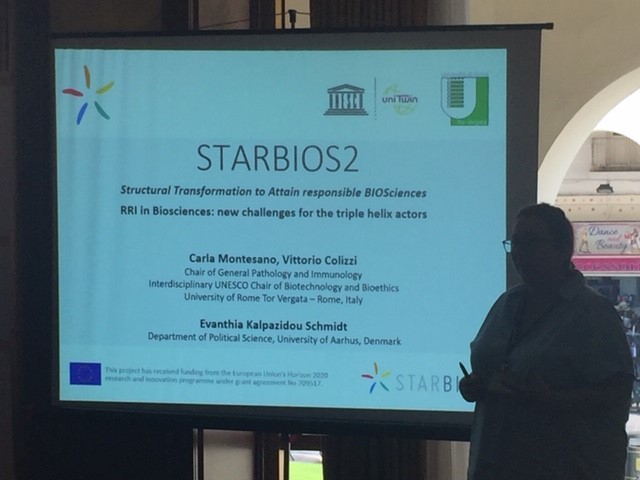
Carla Montesano presenting at ETHAC2019 in Thessaloniki, Greece
Now, there is demand for contextualizing bioscience, and focusing on the contribution of various stakeholders into both research and policy practice.
“We need to respond! We need to move our research focus and practice from a single living being, to including that being’s environment and the connections between the two. The same goes for our research practices. We cannot operate on small isolated islands anymore. We need Open Science, because we need wider networks that shares ideas, knowledge and resources”, Carla Montesano says.
Last week, STARBIOS2 members were busy at ScanBalt Forum, and this years theme was “Molecular Biology and Immunology of Cancer – R&D perspectives”.
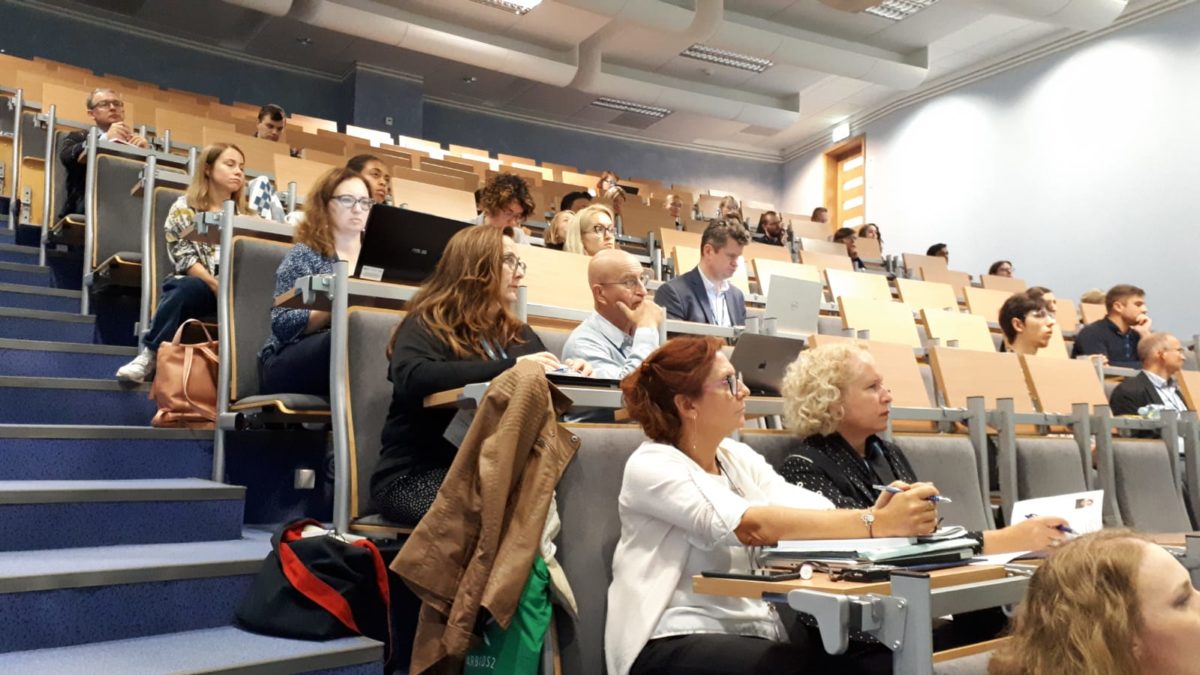
Hosted in Gdansk, Poland, partners from University of Gdansk were of course present. But so were consortium members from Italy, from University of Tor Vergata and from Laboratory of Citizen Science.
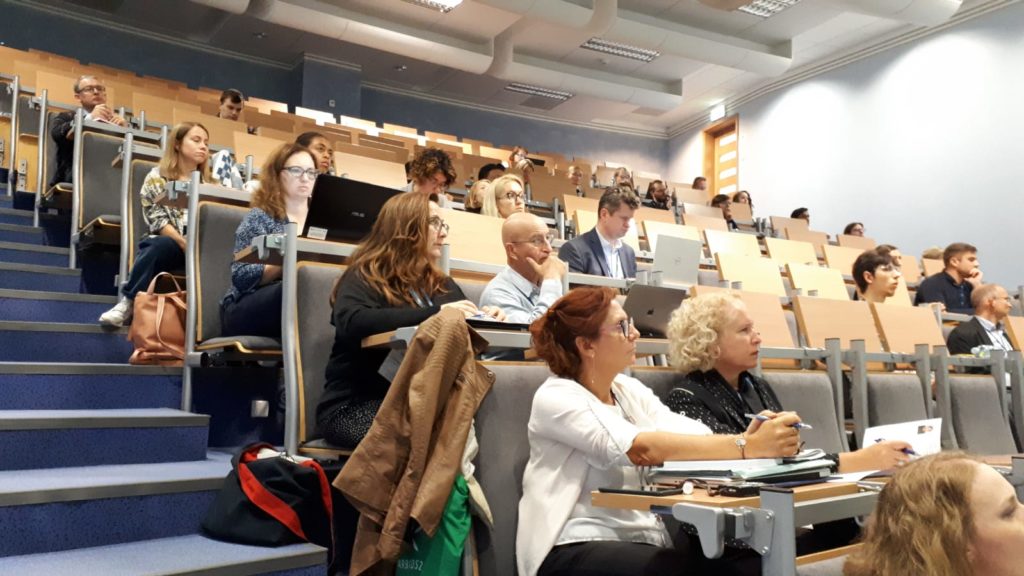
In the audience: Izabela Raszczyk, Carla Montesano, Vittorio Colizzi, Claudia Colonello, and Evanthia K. Schmidt. Photo by Marta Dziedzik
”Science & society are in a complex transition. Structures, norms, values, and practices are changing. This is affecting bioscience. Under what conditions can RRI be an effective reaction?”
Claudia Colonello
Claudia Colonello gave a talk titled “Structural Change to Attain Responsible Biosceinces: the experience of the STARBIOS2 project” where she described the complex transition facing the biosciences today. In her presentation, Claudia raised an important question: ”Science & society are in a complex transition. Structures, norms, values, and practices are changing. This is affecting bioscience. Under what conditions can #RRI be an effective reaction?”
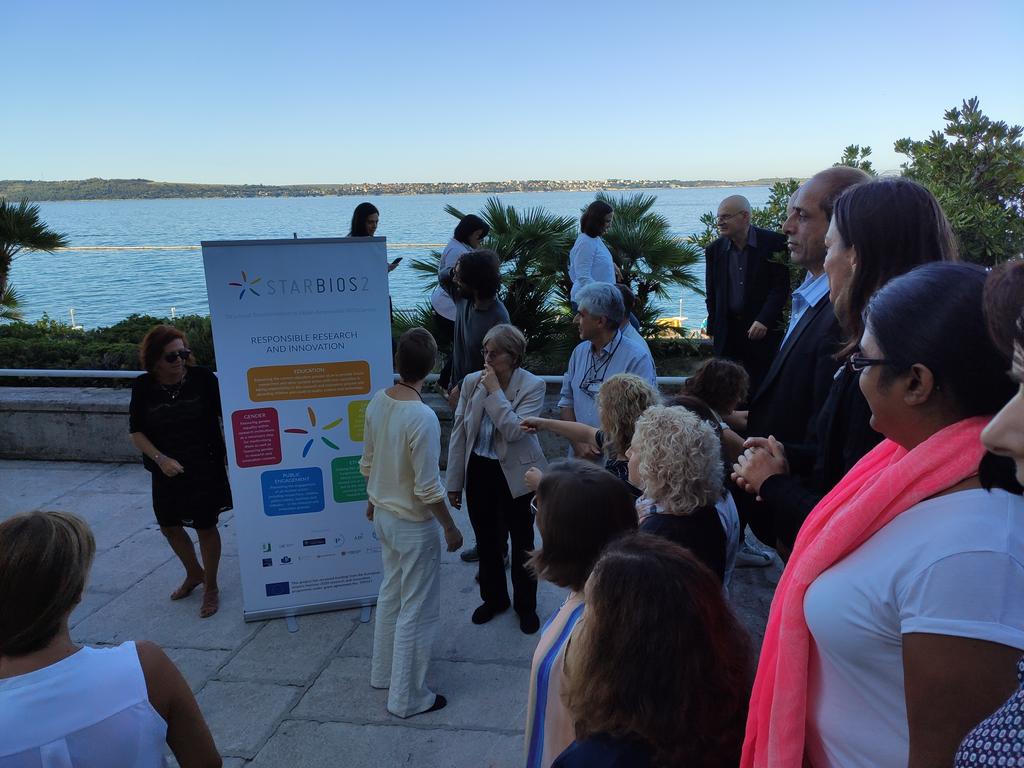
12-13 September 2019, the STARBIOS2 consortium met in Portoroz, Slovenia to discuss how to sustain the structural changes made in during the project. And to figure out how to disseminate and communicate about the guidelines for maximum impact, so that other bioscience research institutions can learn from our experiences. Curious? Have a look at some of the highlights below.
On September 12-13, the STARBIOS2 consortium steering committee will meet in Slovenia to discuss the guidelines, action plans and how we can make sure our results are shared with both the RRI and bioscience communities.
The agenda covers updates on the first six action plans from all implementing partners, and the following three action plans that will be carried out by our partners from Brazil, South Africa and the US. We will discuss how to ensure the project has impact on bioscience research organisations in Europe and elsewhere, plan our final events in Cape Town and Brussels next year. Followed by what, where and how to publish our results to ensure our outputs are available for the scientific community.
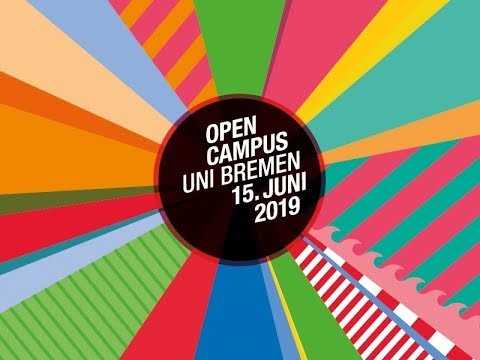
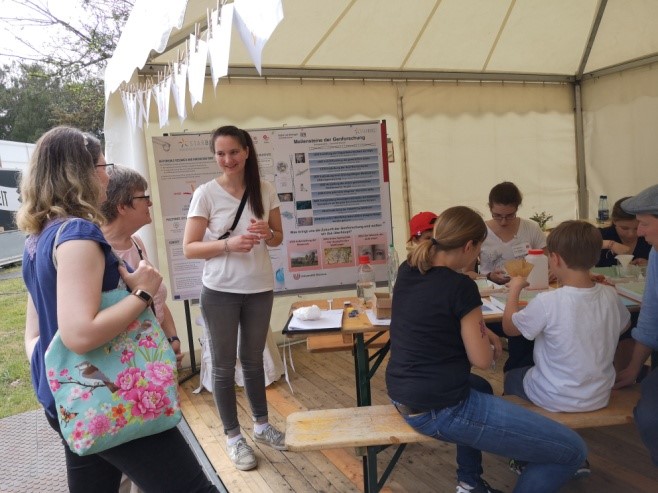
STARBIOS2 partner University of Bremen invited interested people in their local community to the OPEN CAMPUS on 15 June 2019. In addition to the extensive and varied programme, guest took part in guided tours, a “children’s campus”, concerts and a poetry slam on the outdoor stage. 2000 visitors accepted the invitation.
“It was a successful event with many interested participants and a great opportunity to disseminate the concept of responsible research and innovation and the STARBIOS2 project,” says Tanja Barendziak, part of the STARBIOS2 team at OPEN CAMPUS.
Under the slogan Open Worlds – Share Knowledge researchers from different faculties, institutes, affiliated institutes and research unites shared fascinating insights into their work and projects.
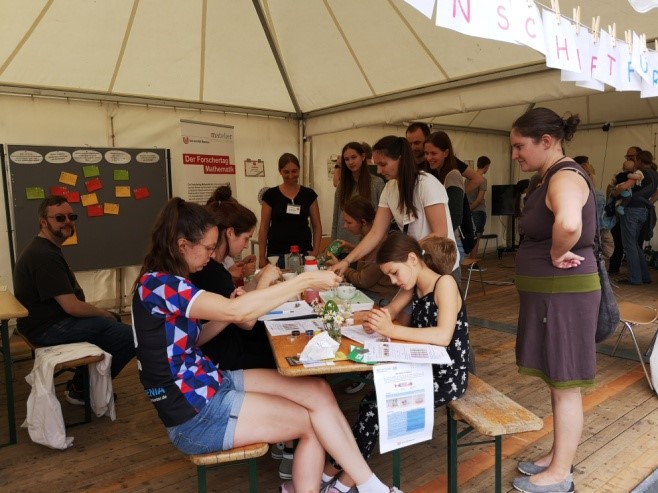
Based on their previous work on “Science for You and Me”, the STARBIOS2 team presented the topic of genetic engineering and the challenges this technology brings. Children’s hands-on activities included DNA isolation from strawberries and construction of DNA models with pearls.
Guests interested in learning more took part in a reflective activity on future topics of genetic engineering: “Should mammoths be brought to life?”, “Green genetic engineering as a solution to global hunger?” and “The humanity that no longer ages?” Participants reflected on various key questions (e. g. What problems could this research entail?) and to write their thoughts on ready-made note sheets. Their notes were collected, put on a pin board, and used as a basis for further discussion by other participants.
Polish participation in the EU research programmes was in focus when KRAB (the Polish Council of EU Research Project Coordinators) and STARBIOS2 partner University of Gdansk organised its 17th symposium.
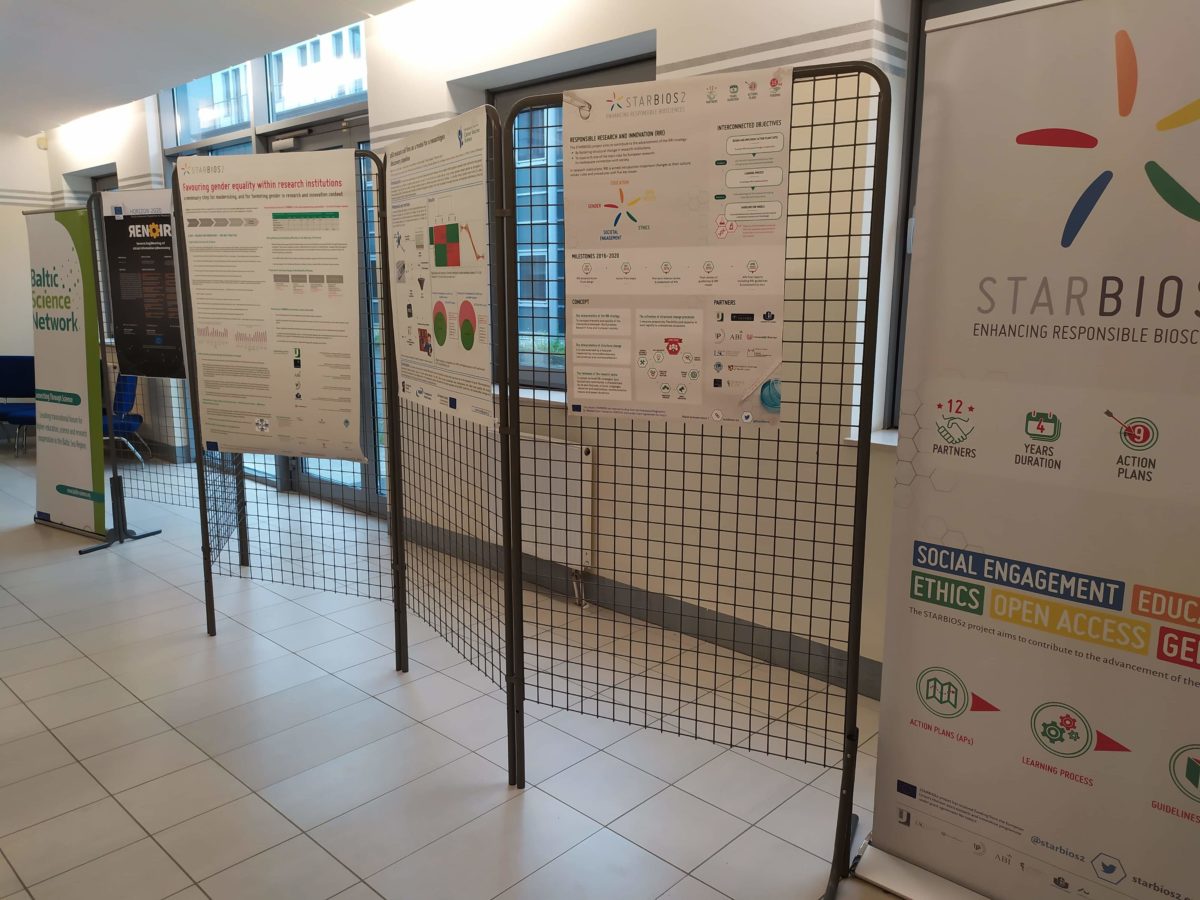
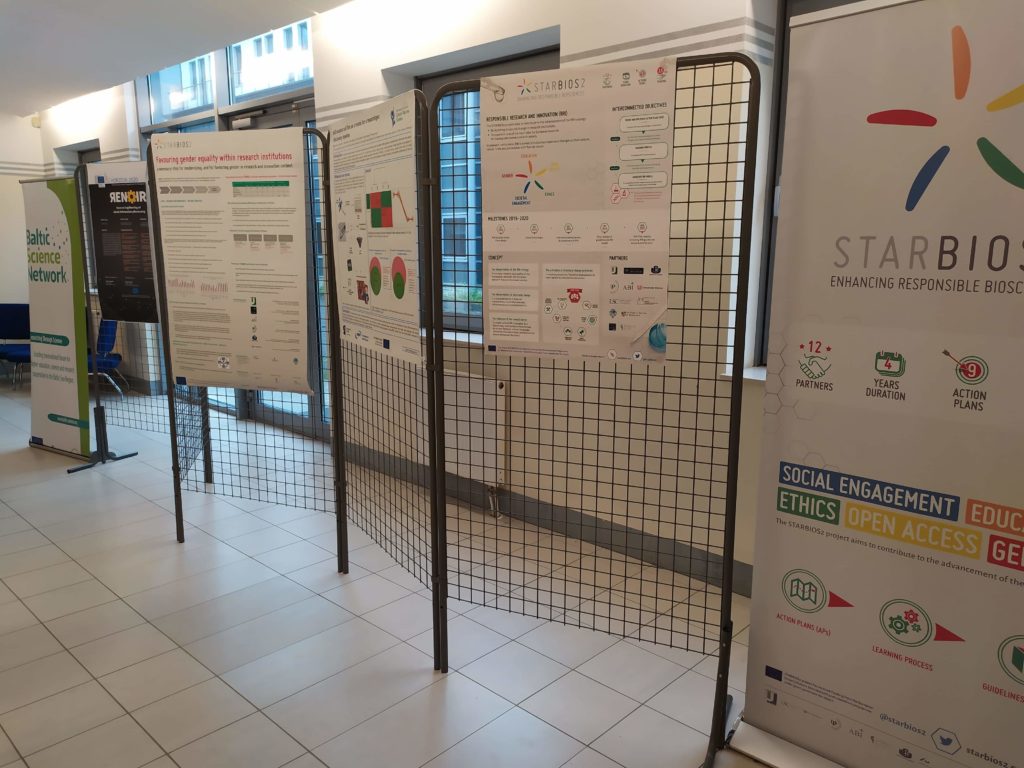
STARBIOS2 posters at the event
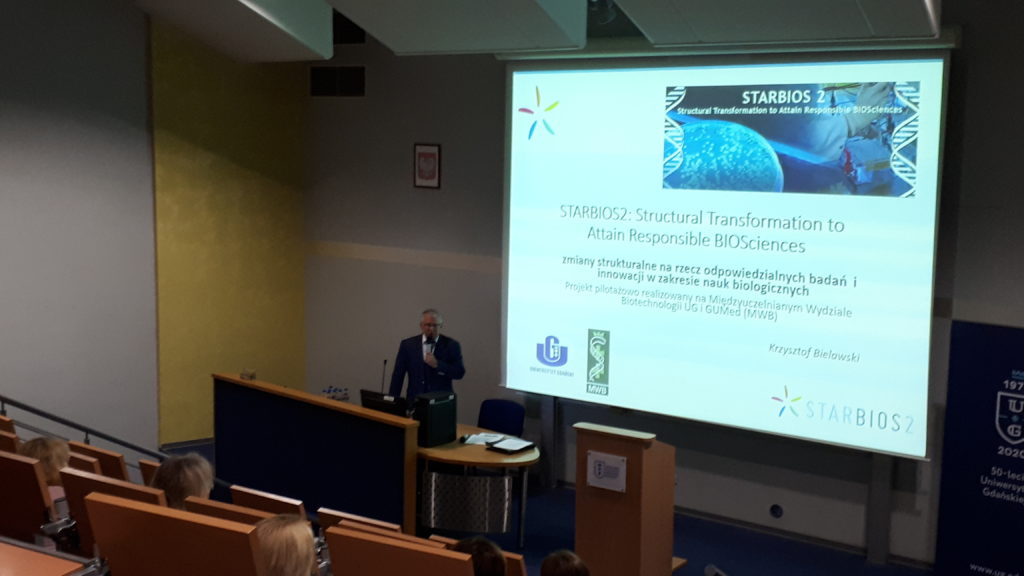
Aiming to increase Polish participation in EU research programmes, 60 participants shared best practice for management and realization of Polish EU research at the 13-14 June event. University of Gdansk introduced STARBIOS2 to highlight their work on enhancing responsible biosciences.
Professor Krzysztof P. Bielawski presented STARBIOS2: Structural Transformation to Attain Responsible BIOSciences (H2020). Honorary partons of the event
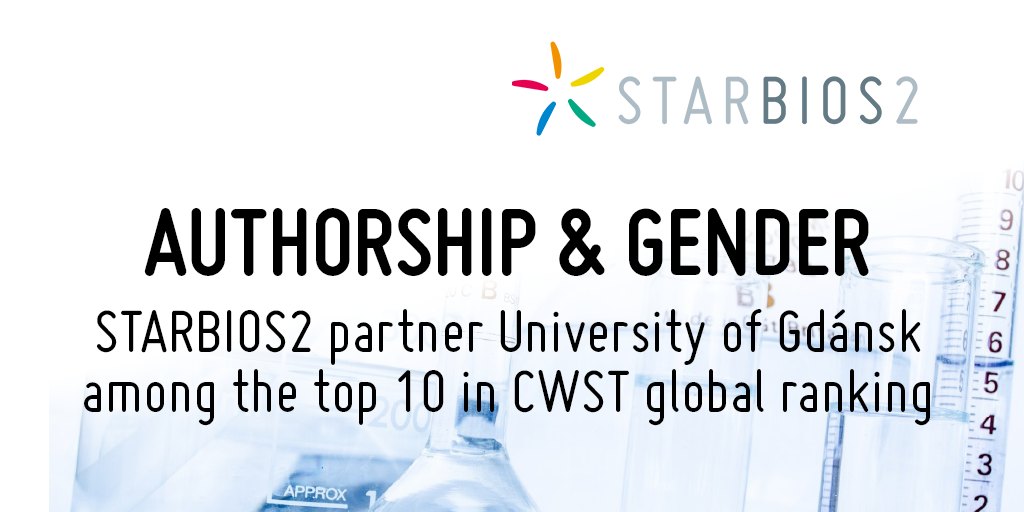
STARBIOS2 partner University of Gdánsk among the top 10 in the CWTS Leiden global ranking of the share of female authorships of scientific publications!
This is the first time the gender diversity was used as an indicator for rating. The list is part of the annual international CWTS Leiden Ranking 2019 and measures academic activity of universities around the world. based on the scientific publication. Between 2014 and 2017, female researchers held approximately 30 percent of all authorships. 963 universities are included in the ranking.