STARBIOS2 Blog Open Access in Biosciences UG

Open Access in Biosciences Research, Gdansk University

Editorial TeamOpen Access, RRI

STARBIOS2 Blog Open Access University
How do you understand Open Access in biosciences research?  

Open Access (OA) is providing a free-of-charge access to research results – scientific publications –  via online access. Individuals and institutions that would otherwise not easily have access to research findings gain knowledge about new discoveries when these information are disseminated in OA. This increases the benefit for society: research findings can be accessed, used and reused, further developed by scientists from different backgrounds and disciplines as well as by non-scientists.

What are the current standards and actions to achieve better Open Access in your University and in your country?

The Polish Ministry for Science and Higher Education supports OA and recommends its implementation by research institutions. Several reports have been published on the state-of-the-art of OA in Poland. There are units and initiatives strongly supporting the development of OA in Poland, such as  Platform for Open Science, Coalition for Open Education. Recently, the University of Gdańsk has adopted its policy on OA.

What are you aiming for with the implementation of the STARBIOS2 actions towards better Open Access standards for your institute?

Our goal is to support an institution-wide strategy towards improved OA to the results worked out by our scientists. We believe that OA is only possible with the joint efforts of authors, editors, librarians, supporting staff, and funders. In our project activities we focus on rising awareness among scientists on the importance and benefits of OA. At the same time, we conduct actions aimed at educating authors as well as university in-house editors about tools and mechanism that enable publishing in impacted journals, properly securing copyrights, and granting an open access at the same time.

What kind of actions are you going to establish to fulfill your objectives?

We organise information seminars and workshops on Open Access conducted by invited experts in the field as well as discuss obstacles and solutions to OA publishing, e.g. in panel discussions with bioscience researchers. In our actions, we work closely together with the UG Office for Science and UG Library in order to support the establishing of an OA policy in our university and the development of institutional repositories. In addition, we have also built links to Open Access initiatives from outside our institution.

Who is involved, from your University, in the AP in order to complete your final objective?

The STARBIOS2 Team at the Uiversity of Gdansk consists of staff members from biotechnology, social sciences, faculty, and administration. In activities related to OA our main internal partners are the UG Office for Science and UG Library.

Read also our previous article by the University of Gdansk on Gender in Biosciences.

STARBIOS2_FEATURES IMAGE - Women in Science University of Gdansk

WOMEN IN SCIENCE – STARBIOS2 events at Gdansk University

Editorial TeamSTARBIOS2


As a part of the STARBIOS2 activities, the University of Gdansk organised two events, dedicated to Women in Science.

Seminar: Women in Science
STARBIOS2 University Gdansk Gender

Prof. D.Sc. Krzysztof Bielawski, Dr Natasza Kosakowska–Berezecka, Dr Magdalena Żadkowska

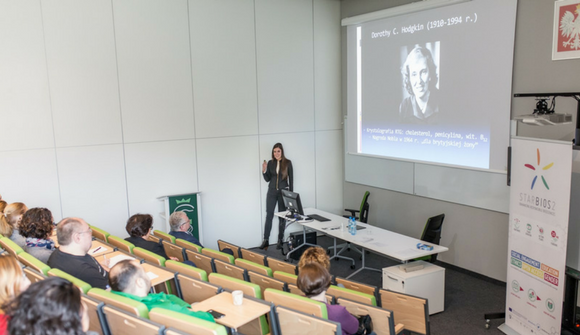
An open seminar dedicated to women in science took place on 1st December 2017 at the Intercollegiate Faculty of Biotechnology of University of Gdansk. The meeting opened by Prof. D.Sc. Krzysztof Bielawski, a supervisor of the STARBIOS2 at the University of Gdansk, was moderated by Prof. D.Sc. Ewa Łojkowska, an outstanding woman researcher and a great supporter of women science career development, both as a head of The Laboratory of Plant Protection and Biotechnology at University of Gdańsk and as a Chair of the Jury of the “L’Oréal-UNESCO for Women in Science” programme.

dr Magdalena Król University Professor at Warsaw University of Life Sciences

Dr Magdalena Król, University Professor at Warsaw University of Life Sciences

In the first part of the meeting Dr Natasza Kosakowska – Berezecka and Dr Magdalena Żadkowska from University of Gdansk discussed and presented the results of the report Gender gap in Biosciences that they had conducted within STARBIOS 2 actions at the IFB of UG. The second presentation was led by a guest speaker Dr Magdalena Król University Professor at Warsaw University of Life Sciences, a renowned researcher granted several scientific prizes and distinctions including L`Oreal & Unesco “for Woman in Science” habitation fellowship. Dr Magdalena Król presented difficult aspects of women careers’ development in the past and today talking about its challenges and perspectives. The audience raised several questions and issues after both presentations.

DIVERSITY MANAGEMENT IN A TEAM
Gender UG STARBIOS2

Dr Natasza Kosakowska – Berezecka and Dr Magdalena Żadkowska with the participants of the workshop

An interactive workshop was conducted the same day by Dr Natasza KosakowskaBerezecka and Dr Magdalena Żadkowska for members and leaders of research groups of Intercollegiate Faculty of Biotechnology at the University of Gdansk. The aim of the workshop was to provide the participants with tools used to increase the effectiveness of management in the teams diverse due to sex, age, nationality or talents


Check our previous Q&A on Gender in Biosciences with our partners from the University of Gdansk.

Featured Image STARBIOS2 Blog

Gender in Biosciences research in the University of Gdansk

Editorial TeamGender, RRI

Gender STARBIOS2 Gdansk University
How do you understand “gender” in Biosciences research?

Our focus on gender is intersectional as it overlaps with other important roles women and men undertake:

The gender of the researcher: it is important to bear in mind the number of male and female staff at the Intercollegiate Faculty of Biotechnology UG & MUG (IFB) and of different obstacles to their research careers that might result from gender stereotypes that influence the concepts of what men/women should and shouldn’t do.

The gender of the student: we are aware of IFB being a faculty with a majority of women, so we know it is good to design the teaching programmes in such a way as to attract also more male students and give equal chances for both genders.

The gender and the management level in institutions: it is necessary to highlight that gender stereotypes have a strong impact on leadership structure, so we understand the meaning of tailored training in leadership skills.

The gender and role-models: in our opinion well promoted roles models of both male and female scientists encourage researchers to take up new tasks and that work-life balance has a positive effect on facilitating gender equality in institutions.

What are the current standarts and actions to achieve better gender equality in Gdansk University and in Poland in general?

The University of Gdańsk has experience in introducing the standards of gender equality policy promoted by the EU.  Researchers take part in projects financed by external funders which focus on implementing gender equality standards (e.g.: PAR Migration Navigator). In other research projects, also in biosciences, gender equality issues have also to be monitored and gender mainstreaming has been implemented, although the required level of insight and intervention requirements differs from funder to funder.  Moreover, Gdańsk as the fourth city in Poland is to introduce the Equality Charter as a standard for citizen actions and city management, so the University of Gdańsk hopes for a large support to structural changes in this respect.

What are you aiming for with the implemention of the STARBIOS2 actions towards better gender equality for the Department of Biotechnology at the University of Gdansk?

STARBIOS2 actions are a strong and potentially influential attempt to facilitate a structural change and build an environment that will be known as an open place where diversity and equal chances for both women and men is an important value. Based on research results, we know that this will make a contribution to IFB’s success in innovative bioscience research and scientific international cooperation. Taking into account the „leaky pipeline” phenomenon that is also visible at IFB as there are a lot of women starting their scientific careers at the Faculty but less women than men in e.g. group leader positions, we aim at strengthening women’s career development in order to fully gain from the potential that can turn into excellent research results in biotechnology.

STARBIOS2 Gender Quote Gdansk University

What kind of actions are you going to establish to fulfill your objectives?

We investigate the needs for support in career development, taking into account the gender perspective. Based on this we formulate recommendations, and plan to provide training and career development tools for both women and men. Moreover, we will support other initiatives that can support career development and work-life balance.We also want to “showcase” successful women researchers in bioscience and will do this through invited lectures and seminars.

Who is involved, from Gdansk university, in the Action Plan, in order to complete your final objective?

The STARBIOS2 Team at UG cooperates with numerous internal stakeholders, such as UG and IFB authorities, Technology Transfer Office, Science Office, IFB researchers, especially scientists passionate about activating career development. In the area of action within Gender equality we benefit from the experience of our colleagues from the Faculty of Social Sciences, who were integrated into our team.


Read our last Q&A with the University of Gdansk on Societal Engagement.

STARBIOS2_FEATURES IMAGE education in Biosciences

Education as a key RRI issue, seen by the University of Oxford

Editorial TeamEducation, RRI

Education STARBIOS2 Dr Maria Julia Milano Dr Pavel Ovseiko
How do you understand Education in biosciences research?  

Science education is a key element of Responsible Research and Innovation (RRI) framework. The aim is to better connect science and society through various educational approaches and interventions. This is particularly important in biosciences, which can help address some of the key societal challenges identified in Horizon 2020, including health, demographic change and wellbeing as well as food security, sustainable agriculture and forestry, and the bioeconomy.

What are the current standards and actions to achieve better Education in your University and in your country?

NIHR Oxford BRC Research and Education Working group offers a variety of opportunities for training aimed to increase the research capacity of those working in the NHS. There are research Grand Rounds (lectures) for nurses and weekly newsletters to raise awareness of internal and external funding opportunities. The University of Oxford also hosts the Oxford University Clinical Academic Graduate School, which offers an academic foundation programme and Academic Fellowships.

What are you aiming for with the implementation of the STARBIOS2 actions towards better Education standards for your institute?

There are many educational opportunities at the University of Oxford via departmental seminars and training programmes associated with the NIHR Oxford BRC. We aim to identify the most appropriate avenues to disseminate RRI. These opportunities will fit into the delivery mechanism of the educational programmes, the local entrepreneurial milieu, and focus on the work of the NIHR Oxford BRC.

What kind of actions are you going to establish to fulfil your objectives?

Two main actions will be implemented. First, given the depth and breadth of research and innovation within the NIHR Oxford BRC and the University of Oxford, a brief scoping exercise will be done to find out what the learning priorities are, based on the experience of those having gone through the process in Oxford. Second, once opportunities to disseminate RRI have been identified, we will offer talks, lectures, seminars, and workshops. In doing so, we will learn from the training modules designed by our partner from University Tor Vergata.

Who is involved, from your University, in the AP in order to complete your final objective?

Our work requires a close collaboration between STARBIOS2 team, Dr Lorna Henderson (Oxford BRC Clinical Research Manager), Dr Vasiliki Kiparoglou (Oxford BRC Head of operations), and Dr Denise Best (University of Oxford Academic Clinical Careers Manager and NIHR Oxford BRC training lead). Dr Denise Best presented her work to the evaluation team at Oxford in October, and we are excited to build on this collaboration to make further structural changes.

Read our previous Q&A on “Open Access” with Dr Maria Milano and Dr Laurel Edmunds from the University of Oxford.

Featured Image STARBIOS2 Blog

Open Access in Biosciences at the University of Primorska

Editorial TeamOpen Access, RRI

Open Access Biosciences University of Primorska STARBIOS2
How do you understand Open Access in biosciences research?

The open access publications enable the new forms of scientific communication, networking and transfer of knowledge. In the so-called “Open Science” movement, teachers and researchers share their research results and information in real time with each other and with the public. With open access, this information can also be used by those persons and institutions that have not previously access to research results and could not finance such access.

Scientists and academics are not the only groups that can benefit from open access publications. The demand from the business sector and individual citizens for access to research results in the form of data in publications is also important.

What are the current standards and actions to achieve better Open Access in your University and in your country?

The departments of biosciences (Biodiversity, Biopsychology and Applied sciences), at the University of Primorska, aim to raise awareness for accessing and sharing research results and publications. Introduction of Open Access policy is relatively new for our University and also to the other research institutions in Slovenia. A brief overview of Open Access situation is presented on the Open Science website. The Government of the Republic of Slovenia adopted the National Strategy of Open Access to Scientific Publications and Research Data in Slovenia 2015-2020 in September 2015 (ROARMAP record) and the action plan in May 2017.

What are you aiming for with the implementation of the STARBIOS2 actions towards better Open Access standards for your institute?

The project will help researchers to comply with open access obligations and promote a culture of sharing. It will also encourage them to provide open access to research results (produced by and to be used by the University) as well as other types of scientific publications including scientific monographs and books.

What kind of actions are you going to establish to fulfill your objectives?

The provisions of Slovenian national strategies for open access to scientific information prescribe publication in open access. It is required that all publications relating to research results obtained in the framework of nationally funded research be openly accessible. Therefore, action will focus on activities regarding the information about Slovenian national strategies for open access and achievement of compliance with open access requirements. Besides, guidelines focusing on option to find an institutional or data repository to deposit research results, as well as copyright agreement will be discussed.

Who is involved, from your University, in the AP in order to complete your final objective?

The process of structural changes is driven by our core team, dr. Elena Bužan, Sandra Potušek, and Felicita Urzi, with close collaboration of the University library team and other researchers at the department level.


Read also our previous blog post by the University of Primorska on Societal Engagement in Biosciences research.

STARBIOS2-SCM Oxford - partners

Steering Committee Meeting of STARBIOS2 partners in Oxford

Editorial TeamSTARBIOS2


STARBIOS2 partners

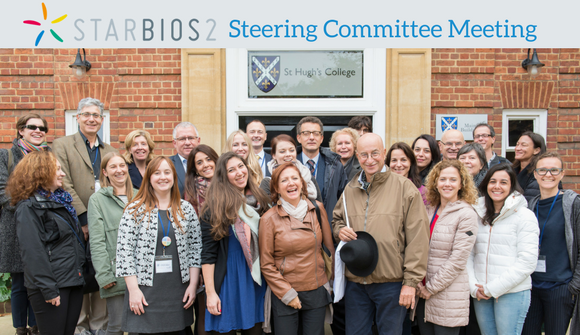
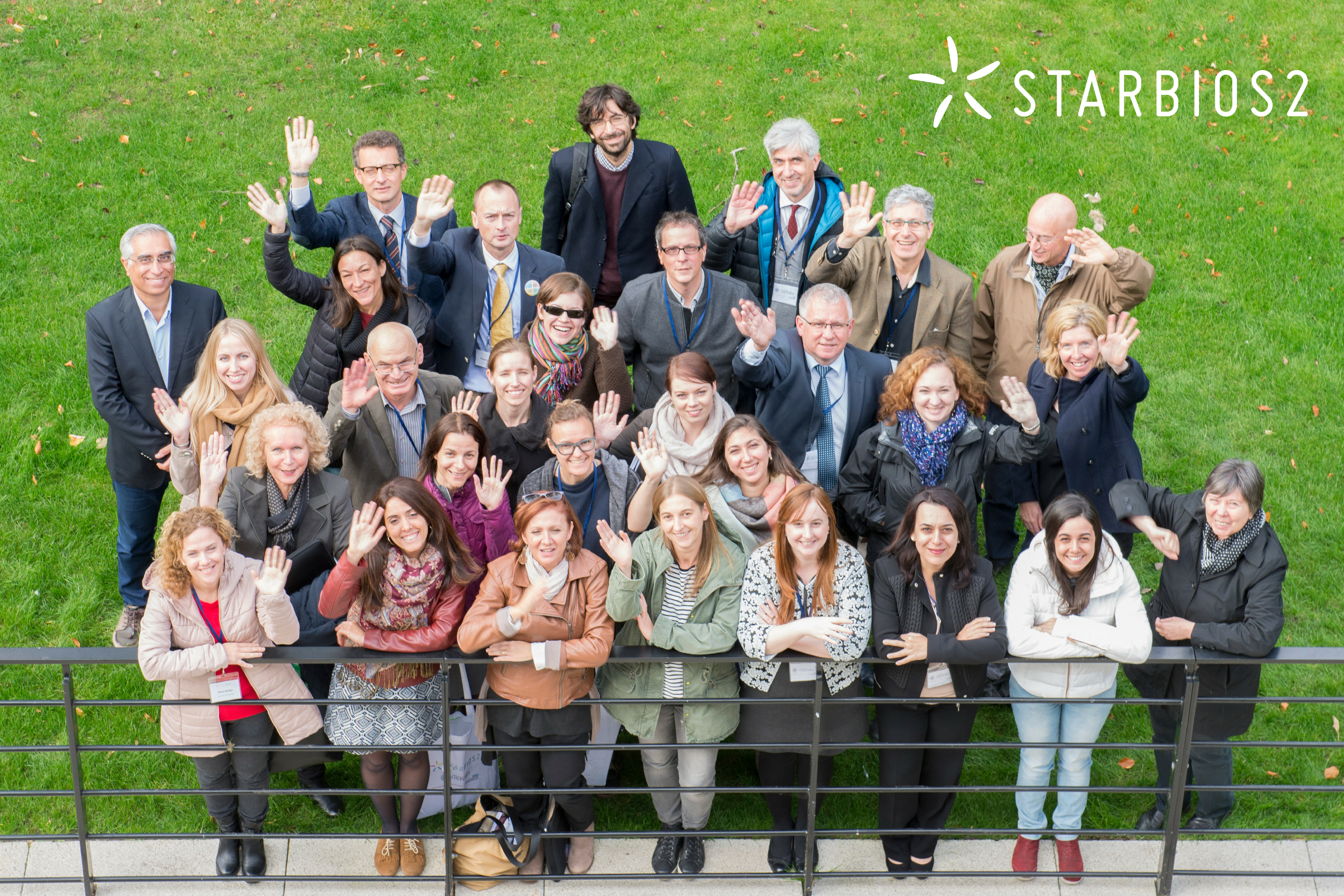
On the 4th – 5th of October 2017, all the partners of the STARBIOS2 project came together for the Steering Committee Meeting at St Hugh’s College of the University of Oxford.

Each of the partners presented their updates on the project and plans for the future on implementing 5 key issues of RRI (ethics, education, open access, societal engagement, gender) at their institutions. There are 12 partners involved in the STARBIOS2 project, including 6 Universities, implementing Action Plans, 3 support teams and 3 international partners. The coordinator of the STARBIOS2 project is Prof. Vittorio Colizzi from the University of Rome – Tor Vergata (UNITOV).

Work Packages

Each of the partners are responsible for different Work Packages within the project:

WP Number
WP Title
Lead beneficiary
Country
WP1 Ethics Requirement UNITOV Italy
WP2 Action Plan for RRI of the University of Tor Vergata UNITOV Itay
WP3 Action Plan for RRI of the University of Oxford UOXF UK
WP4 Action Plan for RRI of Primorska University UP Slovenia
WP5 Action Plan for RRI of the University of Bremen and related road map Uni-HB Germany
WP6 Action Plan for RRI of Agrobioinstitute Sofia ABI Bulgaria
WP7 Action Plan for RRI of the Intercollegiate Faculty of Biotechnology UG & MUG, UG UG Poland
WP8 Technical Assistance LSC Italy
WP9 Learning Process on RRI implementation in biosciences and set-up of a RRI model UNITOV Italy
WP10 Monitoring and Assessment AU Denmark
WP11 Communication and Dissemination SPARKS & CO France
WP12 Project Management UNITOV Italy

Formal Dinner

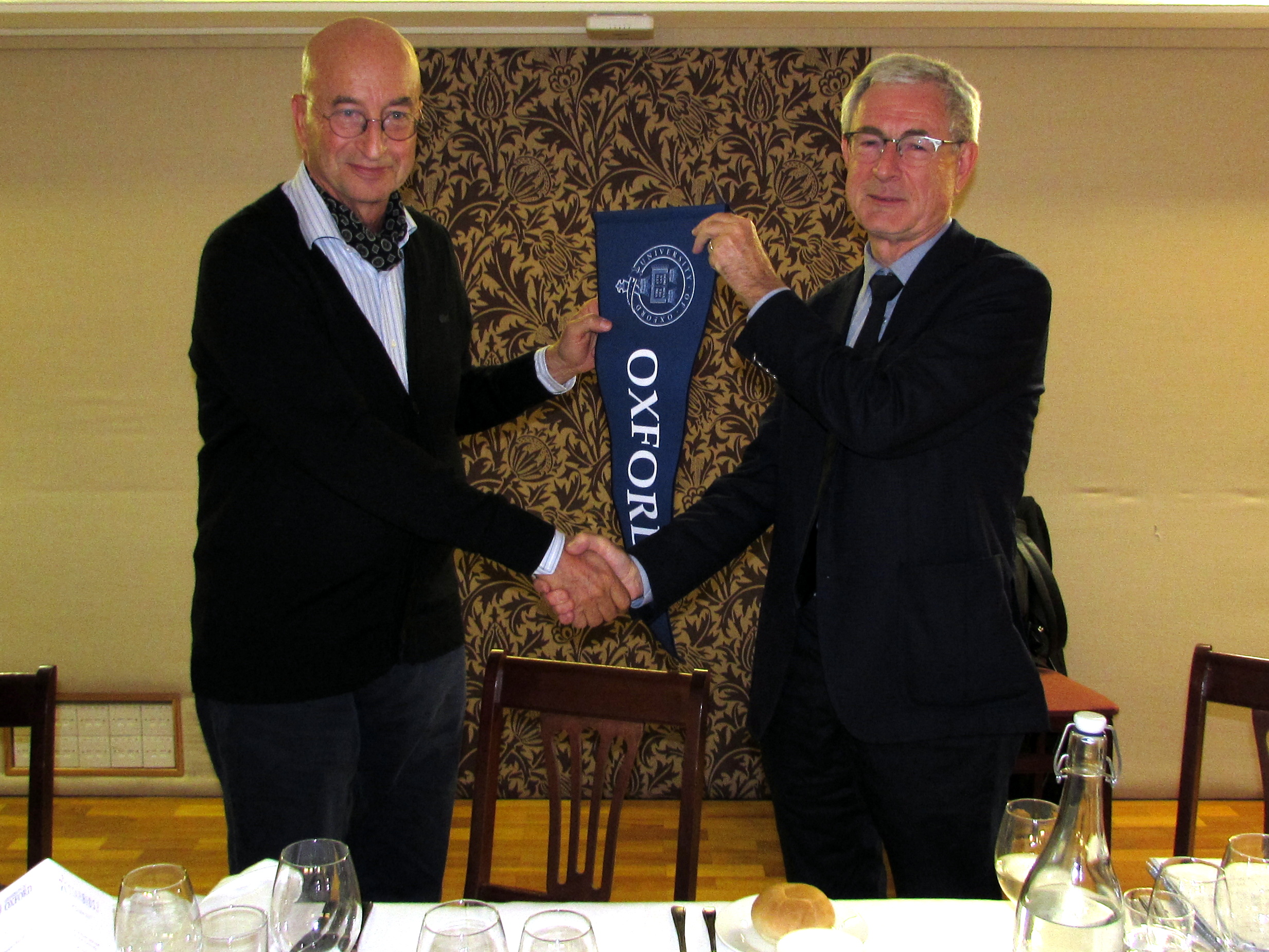
On the first evening of the Steering Committee Meeting, the partners had a formal dinner, served at St Hugh’s College. During the dinner, Professor Alastair Buchan, FMedSci, FRCP, FRCP (Edin), FRCPC – Head of Brexit Strategy and Pro-Vice-Chancellor of the University of Oxford, and The Rt Hon Dame Elish Angiolini DBE QC FRSE – Principal of St Hugh’s College, delivered speeches, welcoming the STARBIOS2 partners to St Hugh’s College at the University of Oxford.


Prof Vittorio Colizzi and Professor Alastair Buchan STARBIOS2

Prof Vittorio Colizzi, coordinator of the STARBIOS2 project and Professor Alastair Buchan, Head of Brexit Strategy and Pro-Vice-Chancellor of the University of Oxford


STARBIOS2 ALL PARTNERS LOGOS

STARBIOS2-FEATURES IMAGE - UNITOV- Education

Education in Biosciences, seen by the University of Rome – Tor Vergata, Italy

Editorial TeamEducation, RRI

STARBIOS2 - UNITOV - Education

Dr. Carla MontesanoAssistant Professor of General Pathology and Immunology, member of STARBIOS2 Coordination Team, and responsible for the STARBIOS2 Action Plan of University of Rome – Tor Vergata.

Dr. Antonella MinutoloPhD in Experimental Medical Microbiology and Immunology and Specialist in Microbiology and Virology; member of STARBIOS2 Coordination Team.

How do you understand Education, as RRI key?  

Education is a crucial RRI key, which deeply affect the relationship between scientific research and society. It’s important to enhance current education process and organization so as to provide future researchers and other social actors having the capacity to take responsibility in research and innovations process, and attracting children and youths to maths, science and technology. In the framework of STARBIOS2, through our Action Plan, we seek to develop a specific approach to education, tailored to specific features of biosciences.

What are the current actions to achieve better Education, as RRI key, in your Department?

In research and teaching activities of the Department of Biology, we have started to deal more systematically, besides the general issues of the topic we work on, also aspects related to social issues. We are trying to enhance what we are already doing in our Department in this regard. The invitation we make to all members of the Department and students is to understand the link between scientific research and society, to avoid self-referential approaches, and to pay attention to the instances of society. This means, among other things, more conscientiously addressing the issues of ecology, or addressing new themes such as sustainable development (e.g. sustainable cultivation), or that of pathologies linked to some lifestyles.

What are you aiming for with the implementation of the STARBIOS2 actions towards better Education standards for your institute?

Our specific objectives are to: contribute to awareness raising of internal and external stakeholders about the RRI; insert RRI into the programs and contents of University courses (starting with the Department of Biology); supporting students in developing countries, both in teaching and on that of professionalization in the field of biosciences.

STARBIOS2_Education_UNITOV_Minutolo_Montesano

What kind of actions are you carrying out to fulfill your objectives?

As for awareness raising on RRI, we are adopting a bottom-up approach, through direct contacts with our internal and external interlocutors. We are also launching a webpage called “Bioscienza responsabile” (www.bioscienzaresponsabile.it) and a newsletter. In cooperation with Italian Alliance for Sustainable Development (within the framework of Agenda 2030) two important meetings on Gender and UNESCO chair were also organised on 6th and 7th June 2017.

As for transferring RRI related issues to students, the activities are just started, but with a good feedback from the people.

As for the Biotechnology transfer in developing countries, we have, among others: inserted RRI in training programs for African students organised by the UNESCO Chair in interdisciplinary biotechnology and bioethics (created in our Department in 1998); organised a Course of Galenic Laboratory (in collaboration with Farmalabor and Farmacap) addressed to African students of Pharmacy; established two scholarships, sponsored by IBI (Istituto Biochimico Italiano) for African students; formalised STARBIOS2 projects as model for University education at the conference “The transfer of technology and University education: experiences and perspectives” (London, 15th July 2017), in agreement with University of Makeni and Sierra Leones stakeholders.

Who is involved, from your University, in the AP in order to complete your final objective?

Since the beginning of the project our effort was to involve personally the Rector and the General Director of the University, our Head of Department, to have their advise and cooperation. We have also established direct contacts with the researchers of our Department (and also of other Faculties, and belonging to other Universities), through one-to-one conversations and meetings with little groups. Lessons and meetings with secondary schools were also organized. The web page of our Department host a section devoted to STARBIOS2 and RRI issues (http://bio.uniroma2.it/starbios2). Several activities, as said before, were organised together with private firms.


Read the last blog posts from the University of Rome Tor Vergata on Gender and Societal Engagement!

Open_Access-Biosciences_Oxford_University_STARBIOS2

Open Access in Biosciences, seen by the University of Oxford, UK

Editorial TeamOpen Access, RRI

Open Access STARBIOS2 Dr Laurel Edmunds and Dr Maria Milano University of Oxford

  • How do you understand Open Access in biosciences research? 

Open access is a way of eliminating permission and price barriers in order to guarantee free access to biosciences research publications. Open access means that the public can access your work. This facilitates greater exposure and higher citation rates because researchers from other countries can view your work.

  • What are the current standards and actions to achieve better Open Access in your University and in your country?

The University of Oxford is very committed to open access and has a webpage dedicated to explaining the University’s position: http://openaccess.ox.ac.uk/ – policy and information. As researchers are actively encouraged to publish open access, this requires a collaborative project that involves many departments such as Research Services, Bodleian Libraries, IT Services, Planning and Resource Allocation Section, Oxford University Press, and Academic Divisions.

There is also an open access policy in institutions of higher education throughout the United Kingdom due to the Research Excellence Framework (REF). In order to receive higher education funding (HEFCE), REF requires journal articles to be made Open Access. The aim of the policy is to increase the amount of UK research which is freely available – and more articles open access means higher REF scores in 2021.

  • What are you aiming for with the implementation of the STARBIOS2 actions towards better Open Access standards for your institute?

The University of Oxford is a leading institution in open access and led a strong communication strategy to engage researchers. We aim to produce an open access evaluation framework based on the experiences of the University of Oxford to identify the key attributions of a successful open access policy. Our goal here is to pass on learnings from these experiences to the rest of the consortium. This will provide an opportunity for mutual learning.

  • What kind of actions are you going to establish to fulfill your objectives?

We will review the literature and consult stakeholders to assess this process and how it is being implemented. The idea is to create a matrix where we highlight the key aspects and processes to trigger a successful open access framework. We are also reviewing the NIHR Oxford Biomedical Research Centres (BRC) policies on publishing open access as peer reviewed publications are a key performance metric.

Open Access STARBIOS2 Dr Lorna Henderson NHIR Oxford Biomedical Research Centre

  • Who is involved, from your University, in the AP in order to complete your final objective?

Our work requires a close collaboration between STARBIOS2 team, Dr Lorna Henderson (Oxford BRC Clinical Research Manager), Dr Vasiliki Kiparoglou (Oxford BRC Head of operations), and the Bodleian libraries team. Ms Sally Rumsey (Head of Scholarly Communications & Research Data Management, Bodleian Libraries, University of Oxford) and Mr Owen Coxall (Outreach and Enquiry Services Manager from Bodleian Healthcare Libraries, University of Oxford). Our Bodleian colleagues presented their work to the evaluation team in Oxford, and we are excited to build on this collaboration to make further structural changes.

Read our previous article by the University of Oxford about Societal Engagement.