Ethics in Biosciences, seen by the University of Bremen, Germany

Editorial TeamEthics, RRI

Ethics_In_Biosciences_University_of_Bremen_Dr_Doris_Elster

University of Bremen – Faculty of Biology & Chemistry
Dr. Doris Elster – Head of the Department of Biology Education at the Institute of Science Education.

  • How do you understand Ethics in biosciences research?

The term “research ethics” comprises a set of values, norms and institutional regulations that support and regulate scientific activities. Research has a fundamental ethos, namely the search for truth. At the same time, research ethics emphasizes that research has a – more general -responsibility for the society. In this area of tension between researcher’s curiosity and responsibility towards humans and the environment research ethics in biosciences occurs.

  • What are the current standards and actions to achieve better Ethics in the University of Bremen?

At the University of Bremen ethical issues are determined within the “Regulations assuring good scientific practice” (German Research Association) and complied within the “Principles of good scientific practice”, adopted by the Academic Senate on February 23, 2002. The nine members of the “Committee for the Investigation of Allegations of Scientific Misconduct” are elected by the Academic Senate of the University of Bremen and investigate and evaluate any concrete suspicion of scientific misconduct.

  • What are you aiming for with the implementation of the STARBIOS2 actions towards better Ethics standards for the Faculty Biology and Chemistry at the University of Bremen?

Our aim is to raise awareness of ethical issues in general and to promote good research practice based on already existing and guidelines as well as further specific guidelines for the biosciences.  At the University of Bremen, the values and principles of good scientific practice are based on truth, fidelity and respect for persons. The individual researcher is responsible for exercising honest research practices; he or she is individually responsible for the activities, the subject matter and method as well as for the quality of the results. In addition, the researcher has to respect and outline the contributions of other researchers and follow standards for authorship and cooperation.

Our specific aim in biosciences research is to raise awareness of ethical issues in accordance with sustainable development, respect for living beings and the environment. In the specific field of “nanobiotechnology” the researcher must take care to clarify the extent of the results’ certainty and validity, as well as indicate any elements of risk or uncertainty that may have consequences for health, society or the environment.

  • What kind of actions are you going to establish to fulfill these objectives?

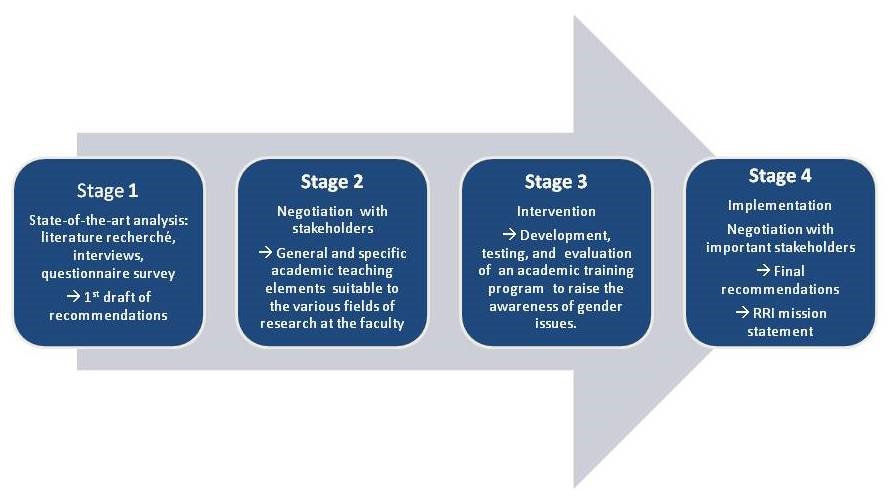
To raise the awareness of students and researchers in respect to ethical issues we have decided to take a number of steps.  At the first stage, we will conduct a state-of-the art analysis based on a literature recherché, guided interviews with members of different focus groups (students, PhD student, postdoctoral researchers, and researchers) to identify attitudes, needs, ethical implications and existing measures at the faculty. Based on the interview analysis we will conduct an online questionnaire survey to get a broader data basis. Based on the results we will deduce a first draft of recommendations.

At the second stage we will discuss and negotiate the first draft of recommendations with important stakeholders at the faculty and members of different focus groups. Our goal is to provide these recommendations with academic teaching aids to include both, general elements and specific (modular) elements suitable to the various fields of research at the faculty (such as protection of animals in research, responsibility and nanobiotechnology, and educational research).

At the third stage we will develop, test and evaluate specific building blocks as elements of an academic training program. This building blocks will be tailored to the individual needs of researchers of different career levels.

In stage 4, based on the results of the evaluation we will deduce a final version of recommendations and training elements about ethical issues and negotiate them with important stakeholders and members of the focus groups. The findings will become part of a RRI mission statement of the faculty biology and chemistry. (The whole process see figure 1)

RRI and ethics action plan at University of Bremen

Figure 1. Process of raising awareness of ethical issues in biosciences research

  • Who is involved, from University of Bremen in the action plan in order to complete the final objectives?

The STARBIOS2 steering team of the Institute of Science Education, Department Biology Didactics, is responsible for conducting the state-of-the art analysis, the interviews and questionnaire survey. The recommendations will be discussed and negotiated within the Core Team, natural scientists of ecology, neurobiochemistry, sustainable chemistry, and molecular biology, social scientists of philosophy, science educators and members of the faculty-intern quality control group.  In addition, members of the focus group doctoral students (with eight members), the focus group students (with eight members), and the focus group advanced researchers (with four members) participate in and contribute to the RRI mission statement development.

Read our previous interview of Dr. Doris Elster on Education in Biosciences!

The 1st Open Science platform launched by Aarhus University, Denmark

Editorial TeamOpen Access, RRI

SPOMAN the 1st Open Science platform
An innovative free of charge tool

Along with a number of leading Danish industrial companies, Aarhus University has opted out of the academic and patenting rat race in a new collaboration on basic research of relevance to industry. Researchers and companies from all over Denmark have the opportunity to publish their results and data on the innovative Open Science platform, where the information is available free of charge to everyone interested.

Established with funds (DKK 2.5 million) from the Danish Industry Foundation, the platform combines basic research with industrial innovation, ensuring that industry and universities get greater benefits from each other’s research and technology. The Open Science platform breaks the barriers that make it difficult and expensive for companies to gain access to the part of basic university research that is most relevant for them. It also addresses a number of major challenges facing basic research, in particular in Denmark, where both researchers and grant providers focus increasingly on safe bets.

Why?

Why creating an Open Science platform?

The aim of the Open Science platform is to have university researchers and companies collaborate to create basic new knowledge that is available to everyone – and which no one may patent. However, everyone is subsequently free to use the knowledge to develop and patent their own products. The interest for such an idea of collaborating in a patent-free zone is enormous among companies that otherwise use substantial resources on protecting their intellectual property rights.

The first platform focuses on smart materials and initially covers twenty companies, including Danish industrial flagships such as ECCO, LEGO, VELUX, Vestas, Grundfos, SP Group and Terma – as well as researchers at the chemistry, physics and engineering departments at AU and other Danish universities.

The new platform could prove transformational: “Other research environments are completely free to imitate us and to copy and paste our model. We hope this will happen. At the rate the project has spread until now, I predict that Open Science can have the same impact on the scientific ecosystem associated with basic research that Internet streaming has had on the music and film industry,” says Professor Kim Daasbjerg, iNANO, who is the initiator of the project and the person in charge of the platform.

 Export the concept?
Will the concept of Open Science work abroad?

The initiative has attracted interest abroad, and the British Department for Business, Energy and Industrial Strategy has approached the university with a view to entering into collaboration. Such a collaboration involves creating and sharing knowledge about what value is created for research and society by openly sharing research data, with a starting point in SPOMAN[1] and two other Open Science initiatives – the Structural Genomics Consortium (SGC) in Oxford and the Montreal Neurological Institute and Hospital (The Neuro) in Canada.

According to Aarhus University, the Open Science platform is the source of a number of paradigm shifts. It not only breaks away from the focus of universities on patenting their discoveries, but also constitutes a rebellion against the business model used by scientific journals. Subscription to important journals is very expensive, also for institutions whose researchers provide the content. The journals assume copyright of the researchers’ articles, meaning that the authors have to pay in order to share their content with the wider public. “Patents and sales of licences run at a loss for most universities. In addition, the Danish Patents Act does not allow for Open Science, where basic research is carried out in a melting pot before you know whether any business can come out of it,” explains Professor Daasbjerg, hoping that the Open Science platform will develop into a movement for openness in basic research.

[1]SPOMAN (Smart Polymer Materials and Nano-Composites is the first Open Science platform and its website is publicly accessible, see http://spoman-os.org/.

For more information, contact:

Dean Niels Chr. Nielsen
Science and Technology
Aarhus University
dean.scitech@au.dk

Professor Kim Daasbjerg
iNANO
Aarhus University
kdaa@chem.au.dk

European Researchers’ Night 2017 header

Meet scientists on European Researchers’ Night 2017

Editorial TeamOpen Access, RRI

The European Researchers’ Night (NIGHT) is a public event dedicated to popular science and fun learning that occurs each year since 2005, on the last friday of September. More than 30 European countries, and 300 cities are involved in that event!

European Researchers’ Night 2017 header

What happens during the European Researchers’ Night?

On this night visitors get the opportunity to meet researchers from all disciplines, in unusual and scenic spaces. 

The event invites you to meet science heroes, researchers from all scientific disciplines whose fascinating work can, and will, change our lives.

This is a unique opportunity to endorse these heroes’ cloak by making you a researcher for the night, discovering countless scientific disciplines, and above all, have fun! All these events will take place on Friday 29 September in several hundred cities throughout Europe and in several neighboring countries.

What is the goal of the European Researchers’ Night?

The main objective of the European Researchers’ Night (NIGHT) is to increase research and innovation awareness, and to bring researchers closer to the general public. It showcases what researchers really do for society, as well as promoting research careers to young people.

Agrobioinstitute (ABI) & the European Researchers’ Night!

This year, on Friday, September 29th, ABI will take part of the NIGHT. You will be able to meet scientists from:

About ABI

Agrobioinstitute is one of the most dynamic research structures in Bulgaria. ABI is well equipped for the development and application of various molecular markers and methods of characterization of genetic resources and biodiversity, as well as for gene cloning, expression, and transgenic research. ABI has been selected Centre of Excellence in Plant Biotechnology by the European Commission (1999) and by the Bulgarian Ministry of Education (2009).

You want to become a scientist for one night, participate in scientific activities and have fun? Don’t hesitate to visit ABI from 17pm to 22pm on the 29/09/2017, the entrance is free!

Click on the link below to have more detailed informations on the European Researchers’ Night in ABI.

Gender in Biosciences, seen by the University of Tor Vergata, Italy

Editorial TeamGender, RRI


Elena Bachiddu – Member of the Department of Biology at the University of Rome “Tor Vergata”. She works in communication, event organization and on the website of the Department. She is a cultural anthropologist and teaches ‘Health and Safety at Work’ for “Didactics of Science” courses, the theoretical-practical modules annually organized by the Department to promote and disseminate scientific knowledge among students of first and second grade schools.

Elena Bachiddu is also a member of the Central Advocacy and Control Committee (CUG-Comitato Unico di Garanzia), where she coordinated Work-Life Balance seminars and publications.

1. How do you understand “Gender” in biosciences research?

Broadly based and explored in the field of Gender Studies theory, the discourse on ‘gender difference’ is emerging nowadays in Italy in the biomedical disciplines where it is understood as closely related to the guidelines of personalized medicine and no longer as limited to the sphere of reproductive health of woman.

Consequently, Gender Medicine, starting from research and biomedical experimentation and pre-clinical studies, appears as an area that currently recognizes and examines the sex and the feminine difference. In this sense research and experimentation approaches are oriented within several pharmacological research projects and research institutes, training of medical specializations, hospitalization procedures in the local healthcare facilities and healthcare policies.

However, in general terms, we must remember that, according to the Global Gender Gap Report presented at the World Economic Forum, Italy still ranks 50th as for women participation in the labor market and for economic opportunities, and in particular according to recent National University Council  (CUN)  data, women in various university career levels are still heavily underrepresented. It is therefore decisive to increase projects and positive actions aimed at improving this situation.

Among the strategic objectives identified by the Starbios2 project, with the aim of modernizing research institutions and to promote a sustainable development, Gender plays a central role, both from an epistemological point of view – as in the various research perspectives in the field of biosciences it is possible to consider sex key variable and gender differences in biological processes – and from the point of view of equality plans in career paths and work organization. Both perspectives are very important for teaching and in the training of new researchers.

2. What are the current standards and actions to achieve better Gender equality in Tor Vergata University and in Italy in general?

Currently within our University there is a Central Advocacy and Control Committee (CUG-Comitato Unico di Garanzia), dedicated to gender equality, which promotes equality culture, vigilance on procedures and regulations on work-life balance and equality plans for all professional roles in the university, including students. From the point of view of training and research, there are workshops on gender oriented studies in humanities, literary and linguistic studies.

Furthermore the University Commission for Sustainable Development identified the objective n.ro 5, UN Agenda 2030 – gender equality and women empowerment – as one of the main areas of its activity. However, the current gender equality standards in our University appear to be insufficient both within the STEM (Science, technology, engineering and mathematics) and the humanities.  Therefore we need a dissemination action to raise awareness on the current differences among women and men in carriers and decision making and on gender models in research activity at the department, macro-area and university levels to make transparent gender biases and inequalities in scientific carriers.

Stakeholder engagement on these issues is gradual and addresses the need to overcome skepticism about the possibilities of change and difficulties in deeply understanding the theme.

3. What are you aiming for with the implementation of the STARBIOS2 actions towards better Gender equality for the Department of Biology at the University of Tor Vergata?

First of all, the activity of our working group is aimed at increasing the perception of gender model in science at the Department and at the macroarea level. The activity stream has been focused on the cultural, organisational and institutional factors hindering women’s careers within the department as well as the university as a whole. This is the first necessary step in order to produce changes in norms, values or culture towards gender oriented practices. Supporting women’s careers and reinforcing the use of gender and sex as key variables in the research programmes are our ultimate goals within the Department and the whole University.

4. What kind of actions are you going to establish to fulfill your objectives?

The first step has been collecting information about women’s situation within the Department and their needs in terms of services and training support. This was done through a consultation of the women and men working in the Department of Biology, through interviews and meetings.  It is necessary to win resistance, so we are using individual interviews to further mutual understanding, to increase interest and awareness before dissemination. In a second phase we will proceed to collect data through quantitative survey, online anonymised questionnaire and qualitative face to face interviews.  

At the same time a set of negotiation activities has already been activated, including both public hearings or events and direct contacts with the concerned university units (human resources department, deans, heads of department, CUG, etc.) and others scientific disciplines researchers, in order to share goals and proposals. Among them we are planning the development of gender indicators concerning the evaluation system of the Italian universities to propose to the National University Council and relevant national government bodies.

To attain the objective of supporting women’s careers, the activity stream of the working group is also addressed to develop a set of policy recommendations for the department and university level focused on new procedures for supporting the access of women to leadership positions. A set of recommendations will be carried out to make transparent gender biases and inequalities in scientific carriers and a seminar will be devoted to the presentation and discussion of the recommendations.

Last June a seminar devoted to gender bioresearch took place; it showed examples of gender oriented research; materials and results from other scientific Italian contexts were provided to demonstrate the utility and the possibility of gender-oriented research. The aim was to launch new possible gender sensitive research projects and to share it with the researchers of our Department in order to produce a real change in research approaches.

A first analysis of the past research programmes has been carried out resulting in a set of possible gender-sensitive new research programmes or research components to be embodied in already existing research programmes considering the role of gender in pathology and therapy and the effects of drugs during pregnancy. Two research programmes will be implemented during a two-year testing period and training on gendered science will be implemented for both researchers and students. The output of the test will be discussed in a workshop involving both the department and other university units.

5. Who is involved, from Tor Vergata Roma University, in the action plan, in order to complete your final objective?

The Research Group on Immunology and Pathology of the Department of Biology is the coordinator of the project. The group is lead by Vittorio Colizzi and is composed by Carla Montesano, Antonella Minutolo and Marina Potestà. They compose the Core Team of the project together with professionals from other research fields and technical teams (Stefano Ciccone, Elena Bachiddu, Daniele Mezzana, Andrea Declich, Ivana Matic).

The core team has also collaborated with university bodies such as the CUG, and with researchers from other disciplines, student and trade organizations.


Gender in Biosciences, seen by the University of Primorska, Slovenia

Editorial TeamGender, RRI


Dr. Elena Buzan – is Head of department for Biodiversity and coordinator of study programme Biodiversity and Nature Conservation at Faculty of Mathematics, Natural Sciences and Information Technologie at University of Primorska. She is also responsible for the societal engagement of UP, for the technology transfer and regulation of policy regarding intellectual property, for promoting gender equality, and for the importance of Open access and ethic knowledge in the bioresearch.

1. How do you understand “Gender” in biosciences research?

I think gender issue is one of the crucial point to solve in Biosciences. Our role as researchers is to limit gender biased messaging. Women should not feel discouraged from pursuing a career in the Biosciences simply because they don’t fit a pre-determined model. A better integration of women after they finished their PhD can only improve science, as with more diversity comes more creative ideas and effective solutions. We need to stop enforcing stereotypical roles and give better support to women with families (especially small children) to continue their scientific carrier.

2. What are the current standards and actions to achieve better Gender equality in Primorska University and in Slovenia in general?

Gender equality in Slovenia is slightly above the EU average, according to the EU Gender Equality Index. In spite of progress over time, there are still challenges ahead. Indicators measuring labour activity showed better results for men than for women. Women are poorly represented in the decision-making positions in employee and employer organizations. Slovenia has a fairly generous framework governing women’s sexual and reproductive health and rights. At the University of Primorska (UP), we do not have a mechanism to assess gender equality. We are planning to start actions to improve gender equality in the near future.

3. What are you aiming for with the implementation of the STARBIOS2 actions towards better Gender equality for the Department of Biodiversity at the University of Primorska?

In order to understand the gender distribution and role within the University we will try to select the most appropriate methodological approach towards Gender standards. We will especially work to promote a positive image of women in sciences. We would also like to know the role that gender plays in publications, grants and international project within UP.  Most importantly, we are starting a long-term survey to record situations connected with Gender equality.


4. What kind of actions are you going to establish to fulfill your objectives?

We are currently running an online questionnaire to get useful informations about experiences with gender equality and other topics connected with women needs for their research carrier support. This will also include personal interviews at the beginning of academic year. We would like to provide more opportunities for women in science in our events; therefore, we will directly invite them to actively participate in oral presentations and also as key-note speakers.

5. Who is involved, from Primorska University, in the action plan, in order to complete your final objective?

The Biodiversity department of UP FAMNIT is covering all actions. We actively collaborate with other departments. Some other experienced researchers are also part of the team – Vladimir Ivović and myself and the young research assistants Sandra Hasić and Felicita Urzi will carry out most of the research work.

Ethics in Biosciences, seen by the University of Gdansk, Poland

Editorial TeamEthics, RRI


Prof. Krzysztof Bielawski – is a Professor at IFB. He is also Vice-Rector for Development at University of Gdańsk (UG) and has a PhD in medical biology and D.Sc. in biological sciences. Prof. Bielawski is a full-professor in biological sciences since 2011.

1. How do you understand “Ethics” in biosciences research?

Ethics plays a vital role in research, especially in biosciences. Two aspects are to be taken into account in this respect. On the one hand, we have ethics in the sense of research ethics, valid for any research area. This includes issues such as research integrity, resolving conflict of interest, equality, so called “good and bad science” issue, etc. On the other hand, specific ethical issues affect the work of bioscience researchers related e.g. to the use of animals, human tissues, embryos or GMO, and have to be dealt with in a responsible way in order to make research safe, reliable and acceptable.

2. What are the current standards and actions to achieve better Ethics in Gdansk University and in Poland in general?

Ethics in biosciences is regulated in Poland by rules introduced on the national level. Researchers need to observe laws and regulations regarding the use of animals, human tissues as well as GMO or GMM.

Specific ethical consents need to be obtained from the respective national or regional bodies as a proof that the institution and the projects complies with the required procedures. In some cases these consents are issued e.g. by the Ministry for Environment in other cases by local ethic committees located e.g. at the medical universities. IFB scientists observe these rules as a part of their usual professional practice.

UG also has a Code of Ethics referring to the overall scientific practice, independently from the area of research, referring to such issues as conflict of interest, research integrity, confidentiality etc.


Photo credits: Tomasz Nowicki for IFB UG & MUG

3. What are you aiming for with the implementation of the STARBIOS2 actions towards better Ethics for the Intercollegiate Faculty of Biotechnology at the University of Gdansk?

Within STARBIOS2 we aspire to collect the standards that our scientists need to observe in one place – making them more visible and better accessible, especially in the context of young researchers who begin their careers. We also think that putting emphasis on the fact that we comply with all required standards and act responsible related to various ethical issues will contribute to reducing bias in society and taking away fears that sometimes result from a lack of knowledge or misunderstandings on the non-scientific part of the society. Emphasis on ethical compliance, in our opinion, is also a positive factor facilitating collaboration between different kind of actors: science, industry, NGOs, end-users.

4. What kind of actions are you going to establish to fulfill your objectives?

A state-of-the-art analysis will help us collect all standards, procedures and regulations in one place. We will analyze internal ethics regulations with respect to the five RRI key issues, and, if necessary, take up negotiations to include missing aspects of the RRI strategy into internal regulations. We also plan to highlight the dilemmas that may be caused by ethical issues and make our scientists, especially young scientists, even more sensitive and aware of the fact that ethics should not be perceived as a burden consisting of a large number of procedures, but that it is a real tool to enhance research quality and social acceptance of research results.

5. Who is involved, from Gdansk University, in the action plan, in order to complete your final objective?

The STARBIOS2 Team at UG cooperates with numerous internal stakeholders, such as UG and IFB authorities, Technology Transfer Office, Science Office, IFB researchers and scientists from other faculties, such as Social Sciences, and possibly also Faculty of Law. Negotiations of any changes proposed for internal regulations would need to be preceded by discussions and approvals of the Ethics Committees, UG Senate’s Committees and other university-wide decisive bodies.

Education in Biosciences, seen by the University of Bremen, Germany

Editorial TeamEducation, RRI

University of Bremen – Faculty of Biology & Chemistry
Dr. Doris Elster – Head of the Department of Biology Education at the Institute of Science Education.

1. How do you understand “Education” in biosciences research?

Science Education is one of the six policy keys within the normative framework of RRI. The core focus is the enhancement of the current education process to better equip citizens (students, teachers, interested laymen) with the necessary knowledge and skills so that they can participate in debates about Research and Innovation (R&I) and can make decisions as scientific literate persons. A further focus of Science Education is to develop and implement educational programs to raise interest in and awareness of responsible research to increase the number of researchers and promote scientific vocations.
2. What are the current standards and actions to achieve better Education in the University of Bremen?

The University of Bremen offers services for doctoral and postdoctoral researchers within the educational center BYRD (Early Career Researcher Development). This is a central hub for early career researchers to foster their independent research skills and to provide the means for individual development as well as career paths.

The qualification program for doctoral researchers covers workshops such as academic writing and publishing, presenting and networking, research methods, or career orientation and job application standards. The BYRD program for postdocs and advanced researchers comprises qualification workshops and support services in the following fields of competences: research, teaching and instruction, internationalization, networking, transfer and science communication, and gender and diversity. Postdocs have the opportunity to network on interdisciplinary issues as well as career development. Coaching and mentoring programs help to develop career plans based on the individual competences.

Although the university-wide BYRD educational program is of high standard, there is a need for specific educational programs for the promotion of RRI issues especially in the field of biosciences. Therefore, one of our goals in the STARBIOS2 project is to contribute specific RRI training modules to the already existing BYRD qualification program.

3. What are you aiming for with the implementation of the STARBIOS2 actions towards better Education standards for the Faculty Biology and Chemistry at the University of Bremen?

The Action Plan (AP) of the University Bremen focuses in the promotion of sensitiveness, awareness and structural change regarding the RRI issues within the Faculty Biology and Chemistry. Education is our main line to trigger practicing and training RRI issues.

One example of good practice towards better educational standards in respect to RRI is the Graduate School NanoCompetence which links researchers and students of natural sciences and social sciences with the goal to support research, application and communication in the field of nano-particles and their effect on humans and the environment.

A further important hub to foster societal engagement through education is the outreach lab Backstage Science. Here we offer an environment for inquiry-based teaching and learning (within the BaSci lab) and a discussion forum for researchers and the public (the so-called BaSci lectures).

We cooperate closely with the faculty-intern Quality Management and Control Group to integrate specific RRI issues in the broader institutional structure. Our goal is to negotiate and to implement a RRI mission statement at the Faculty Biology and Chemistry. In this context we focus on gender sensitiveness by offering mentoring and a female career friendly research environment. Open access to research findings by offering websites and events such as poster awards for different communities, and raising awareness for ethics by updating and reconstructing ethical research guidelines are our further goals.

4. What kind of actions are you going to establish to fulfill your objectives?

To put our AP into practice we developed seven Streams of Actions (SoAs):

A. Setting up criteria for successful societal engagement and technology transfer
B. Promoting societal engagement through socio-scientific contextualization
C. Education to raise the awareness of RRI Keys
D. Raising awareness of gender issues
E. Raising awareness of ethical issues
F. Promotion of open access

H. Making a RRI Mission Statement at faculty level possible

We start each SoA with a comprehensive state-of-the-art analysis. This comprises a complex literature recherché. The findings of the analysis form the basis for the development of theoretical framework to analyse research projects or to develop interview guidelines. The interviews are conducted with different focus group(s) (doctoral students, postdocs, students, researchers). Their findings are the basis for the development of questionnaires for the specific target groups. From the findings we deduce criteria for the successful promotion of the specific RRI issue.
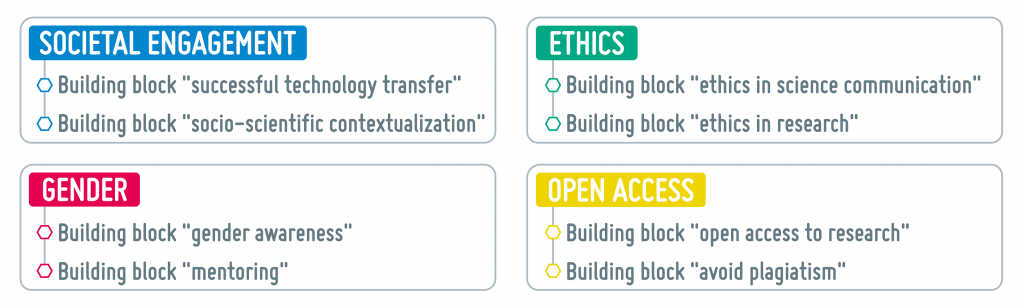
At the next step we develop educational building blocks and activities for the keys Societal Engagement, Technology Transfer, Gender, Ethics, and Open Access. These building blocks and activities will be tested and evaluated within the different focus groups.

The key-specific building blocks (see figure 1) form the basis of the RRI educational training program. The RRI programme will be offered at Faculty level as well as university-wide at the BYRD centre to different target groups (students, doctoral researchers and postdocs). The results of the program evaluation will contribute to the RRI Mission Statement of the Faculty.
We will foster sensitiveness and awareness in respect to RRI through dialog with important stakeholder, offer academic lectures and round tables, highlight transparency and offer a user-friendly website, good practice examples, and recommendations at the faculty level and at the university level.

Figure 1. Building blocks that form the RRI educational training program.

5. Who is involved, from University of Bremen in the action plan in order to complete the final objectives?

The Institute of Science Education, Department Biology Didactics, in cooperation with researchers of the Centre for Environmental Research and Technology triggers the structural change process based on the complex Action Plan (AP). In addition, an interdisciplinary steering committee of natural scientists of ecology, neurobiochemistry, sustainable chemistry, and molecular biology, social scientists of philosophy, science educators and members of the faculty-intern quality control group supports the STARBIOS2 project.

The project follows a top down – bottom up principle. Therefore, the establishment of the focus group doctoral students (with eight members), the focus group students (with eight members), and the focus group advanced researchers (with four members) is important for the development, the evaluation and the implementation of the RRI academic training program.

The RRI mission statement of the Faculty Biology and Chemistry is our major goal (see figure 2). Therefore, members of the deanery, academic committee, and quality management are involved in the project from the very beginning.

Figure 2. Basis for the development of the RRI Mission Statement.

Advancing gender equality through the Athena SWAN Charter for Women in Science

Editorial TeamGender, RRI

Article written by Pavel Ovseiko, Alison Chappell, Laurel Edmunds and Sue Ziebland – Oxford University

Health Policy Research and Systems;15(1):12. doi: 10.1186/s12961-017-0177-9.

Background

All UK universities have been encouraged to take Gender Equality very seriously and instigate many different approaches to improve circumstances for women in science. It is promoted and assessed by a high profile organisation – Athena SWAN which is part of the Equity Challenge Unit (http://www.ecu.ac.uk/equality-charters/athena-swan/). In 2011, the UK Chief Medical Officer was so dismayed  at the lack of women in academic medicine, especially in leadership positions, that she sent a letter to all UK medical schools stating that their funding from the National Institute for Health Research (for their associated Biomedical Research Centres, BRCs, and funding generally) could be at risk if they had not achieved Silver award status. Not surprisingly medical schools and all scientific research establishments across the UK did a lot more to address Gender Equity, and still do.

Despite the wide-spread implementation of the Athena SWAN Charter, there has been very little qualitative evaluation of its impact.

Oxford continues to be very successful with regards to Athena SWAN and funding of the NIHR Oxford Biomedical Research Centre (BRC). There is still work to be done with respect to Gender Equity here, but we have already achieved a lot; for example 16 departments of the Medical Sciences Division (MSD) also integral to the NIHR Oxford BRC, have Silver awards. All this experience of Athena SWAN in turn provided a context for us to explore the impact of these activities and policy changes, particularly as we had access to two studies that had been carried out recently in MSD that included people’s opinions about Athena SWAN.

In the early 2000s, the Athena Project and the Scientific Women’s Academic Network (SWAN) joined and evolved into the Athena SWAN Charter for Women in Science (http://www.ecu.ac.uk/equality-charters/athena-swan/). This is now an established means of advancing gender equality in the sciences here and is also being adopted by Australia and Ireland. There are criteria for each of the Bronze, Silver and Gold awards and each school, or department, applies for the appropriate level, which may or may not be awarded, and, they can be taken away again if standards fall. The key principles of the Charter are shown in the box.

Key principles of the Athena SWAN Charter for Women in Science

  1. We acknowledge that academia cannot reach its full potential unless it can benefit from the talents of all.
  2.  We commit to advancing gender equality in academia, in particular, addressing the loss of women across the career pipeline and the absence of women from senior academic, professional and support roles.
  3. We commit to addressing unequal gender representation across academic disciplines and professional and support functions. In this we recognise disciplinary differences including: the relative underrepresentation of women in senior roles in arts, humanities, social sciences, business and law (AHSSBL), and the particularly high loss rate of women in science, technology, engineering, mathematics and medicine (STEMM)We commit to tackling the gender pay gap.

  4. We commit to removing the obstacles faced by women, in particular, at major points of career development and progression including the transition from PhD into a sustainable academic career.
  5. We commit to addressing the negative consequences of using short-term contracts for the retention and progression of staff in academia, particularly women.
  6. We commit to tackling the discriminatory treatment often experienced by trans people.
  7. We acknowledge that advancing gender equality demands commitment and action from all levels of the organisation and in particular active leadership from those in senior roles.
  8. We commit to making and mainstreaming sustainable structural and cultural changes to advance gender equality, recognising that initiatives and actions that support individuals alone will not sufficiently advance equality.
  9. All individuals have identities shaped by several different factors. We commit to considering the intersection of gender and other factors wherever possible.

Samples

The two studies are very different. One was quantitative data from a validated climate survey from the US (http://www.brandeis.edu/cchange/surveys/cfsdescription/index.html) that we adapted for use in the UK (this did not ask about Athena SWAN). This was an online questionnaire that was available in May-June 2014, to approximately 4000 members of MSD. 2,407 (63%; 56% female) returned their questionnaires and 523 (22%) included anonymised comments of which 11% (42 women, 17 men) were about Athena SWAN. (Many of the other comments were similar in nature but did not mention it specifically.) The second study was qualitative, based on face-to-face interviews and took place from October 2014 – June 2015. A purposive sample of senior women scientists from MSD (n=37) and Mathematical, Physical and Life Sciences Division (n=2) were interviewed about their careers and asked specifically about Athena SWAN as one of the questions. An aim of this study was to post their career experiences on a bespoke website (https://www.womeninscience.ox.ac.uk/).

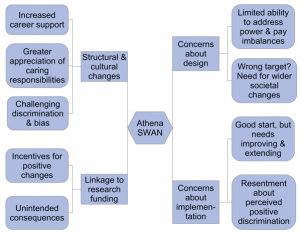
We analysed all the comments using a modified Grounded Theory approach – a relative intuitive but rigorous way of grouping the comments into themes by being organised into the framework (see the coding tree).

Results

Many of the comments about Athena SWAN were very positive, especially from the women who were interviewed. They thought there had been structural and cultural changes such as increased career support, greater awareness of caring responsibilities, and challenges to biases. However the linkage to research funding caused some to be cynical and the need for funding was driving the changes that were supporting or promoting women. Others questioned whether these changes really addressed the pay inequity or male power-bases and so cultural changes were still necessary, while some men were resentful and perceived it as positive discrimination (see the coding tree).

The coding tree

Quick sum up

Both of our data sets were collected for other purposes and so this is a secondary analysis. However, we brought together successful women scientists who were aware of/taken part in Athena SWAN activities and anonymous questionnaire responses from women and men scientists and administrators across different career stages and levels of seniority. Their views are illustrative of how Athena SWAN is perceived in a real context and can improve understanding in our university as well as being a useful contribution to the literature. On balance, implementing the Athena SWAN Charter is creating positive changes that are sustainable, however there are still improvements that can be made to Athena SWAN activities and the university culture.

Within STARBIOS2, we intend to build on this in two ways:

  1. We aim to repeat the interviews with women at all career stages who are associated with the NIHR Oxford BRC. BRCs have become the main academic avenue for translational medicine in the UK and so Oxford can illustrate experiences, aspirations and training needs that may be relevant to others.
  2. These will also inform the development of a new questionnaire which details comprehensive ‘Markers of Achievement’ capturing contributions to translational medicine in a gendered way to embed raised awareness.